
Tirzepatide Research Peptide: Dual-Agonist Mechanism and Study Results
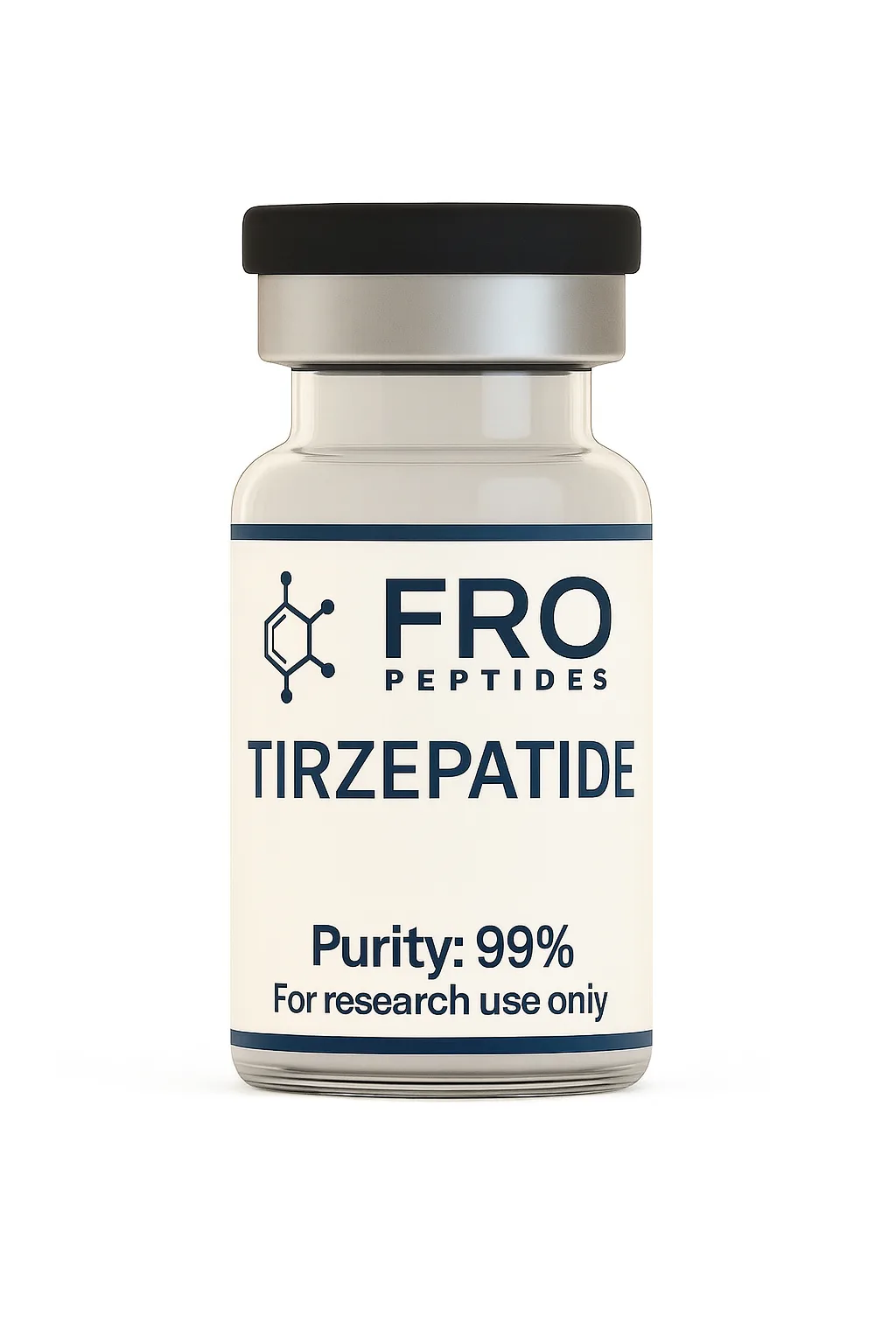
Tirzepatide activates two receptors, GIP and GLP-1, built into a single 39-amino acid peptide. That dual mechanism is why researchers treat it as a distinct case rather than a simple upgrade on single-agonist compounds like semaglutide.
Two Receptors, One Molecule
GIP and GLP-1 both stimulate insulin release, but through separate receptors and separate downstream signaling. GIP’s role in metabolic research stayed uncertain for years, partly because GIP resistance shows up in people with obesity and type 2 diabetes — a pattern that led some researchers to write off GIP agonism as a dead end. Tirzepatide’s data reopened the question. Combining GIP agonism with GLP-1 agonism produced stronger effects on glucose control and weight than GLP-1 agonism alone, and that result is what put GIP back on the table as an active research target.
What SURPASS and SURMOUNT Found
The SURPASS trials tested tirzepatide in type 2 diabetes research; SURMOUNT tested it in obesity research. In SURMOUNT-1, published in 2022, subjects on the highest dose lost an average of 20.9% of body weight over 72 weeks, against 3.1% on placebo. HbA1c reductions across the SURPASS series matched or exceeded semaglutide’s results in head-to-head trial designs, which is the main reason researchers use tirzepatide as a comparator when evaluating newer dual- or triple-agonist compounds like retatrutide.
Verifying What You’re Working With
Tirzepatide’s structure includes a C20 fatty diacid moiety attached to the peptide backbone — the feature responsible for its extended half-life through albumin binding. A mass spec trace can confirm that feature; a basic purity percentage can’t. A COA reporting only an HPLC number leaves the structural question unanswered. FRO Peptides runs both tests on every tirzepatide batch and publishes results per lot — see the independent lab results for the 10mg batch and 30mg batch (Accumark Labs, HPLC + identity confirmation).
Handling for Research Use
Store the lyophilized powder frozen and shielded from light. Reconstitute with bacteriostatic water, refrigerate after reconstitution, and use within your protocol’s defined window. Because the fatty acid modification is what gives this molecule its extended half-life, repeated freeze-thaw cycles risk disrupting that portion of the structure in ways a visual check won’t reveal.
FRO Peptides lists this compound as Compound T, HPLC- and mass spec-verified per batch, available in 10mg–30mg quantities. View Compound T →
For laboratory research use only. Not for human or veterinary use. Not a drug, food, or cosmetic under FDA regulations.