
Retatrutide Research Peptide: The Triple-Agonist Data
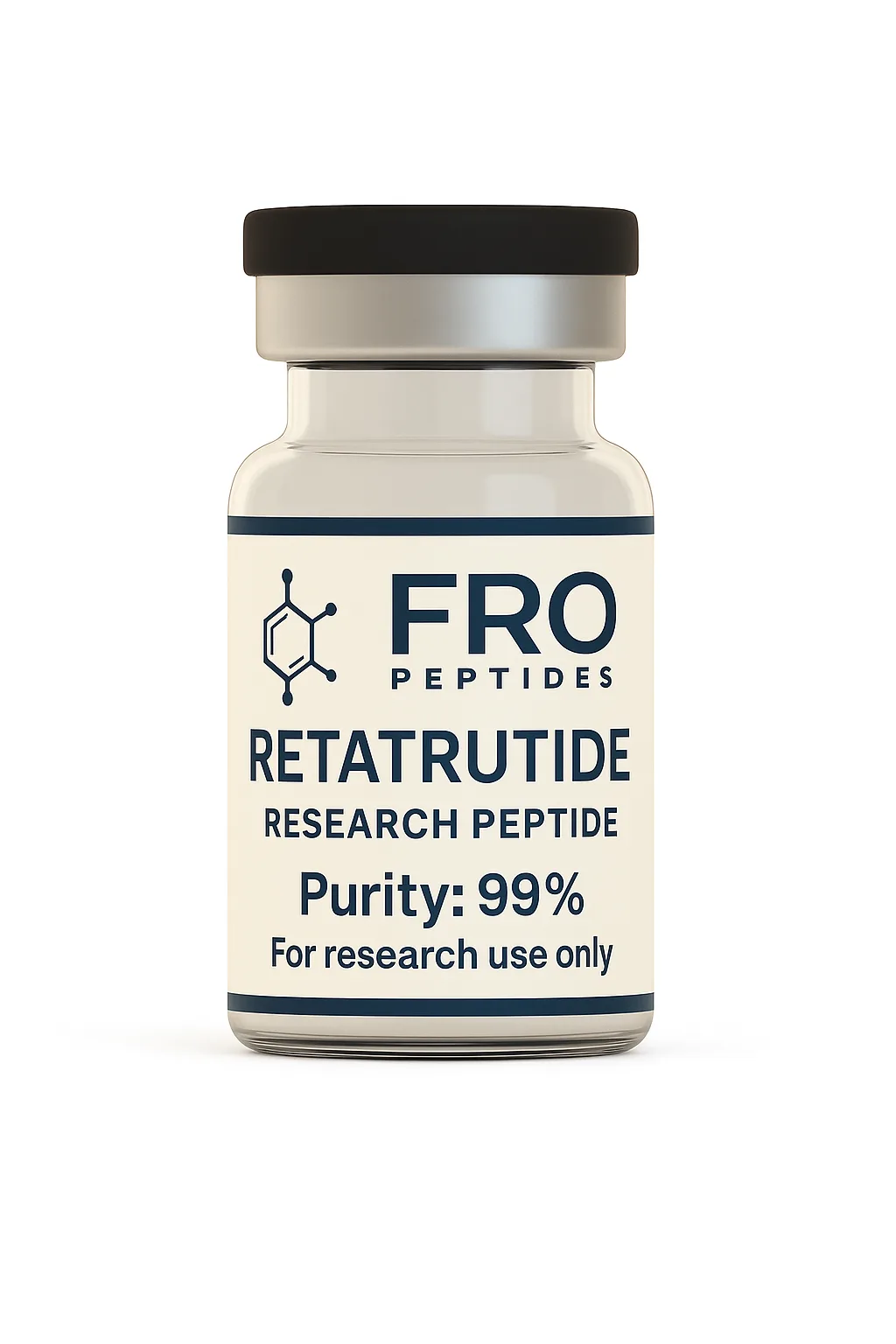
Retatrutide is the first triple hormone receptor agonist to reach late-stage trials, activating GLP-1, GIP, and glucagon receptors in a single molecule. Semaglutide works on GLP-1 alone. Tirzepatide adds GIP. Retatrutide adds glucagon receptor activity on top of both, and that third mechanism is what separates its research profile from the other two.
Why the Glucagon Receptor Matters
Glucagon normally raises blood glucose by prompting the liver to release stored glucose, which looks like an odd inclusion in a compound studied for metabolic research. But glucagon receptor activity also increases energy expenditure and promotes lipolysis, the breakdown of stored fat. Researchers studying retatrutide are looking at what happens when that glucose-raising effect gets offset by strong GLP-1- and GIP-driven insulin secretion in the same molecule. That’s a different mechanistic question than single- or dual-agonist compounds raise, and it’s why retatrutide draws research interest beyond its weight-loss headline numbers.
What the Phase 2 Data Showed
The Phase 2 trial, published in the New England Journal of Medicine in 2023, followed 338 subjects with obesity over 48 weeks. At the highest dose studied, average weight reduction reached 24.2%, the largest figure recorded for an incretin-based compound in a controlled trial at that point. Waist circumference, blood pressure, and lipid markers all moved in the same direction as the weight data. Phase 3 trials were still enrolling as of early 2025, so the Phase 2 results and the mechanistic studies built on them remain the primary dataset available to researchers.
Reading the COA
The same two checks apply here as with any research peptide: HPLC for purity, mass spectrometry for molecular weight confirmation. Retatrutide is a larger, more structurally complex molecule than semaglutide, so structural integrity deserves extra scrutiny. A degraded or misfolded sample can still return a high purity number on HPLC if the assay isn’t built to catch it — a COA with a mass spec trace alongside the HPLC chromatogram gives a fuller picture than either test alone. FRO Peptides runs both on every retatrutide batch — see the independent lab results for the 10mg batch and 30mg batch (Accumark Labs, HPLC + identity confirmation).
Storage Practices
Retatrutide follows the same cold-chain handling as other research peptides: frozen lyophilized storage, reconstitution with bacteriostatic water, refrigeration afterward, and use within the study window. Given the compound’s size and its number of receptor-binding domains, minimizing freeze-thaw cycles matters even more here — each cycle raises the risk of structural degradation that a visual check won’t catch.
Listed on FRO Peptides as Compound R, available in 10mg–20mg quantities, each batch verified by HPLC and mass spectrometry before it ships. View Compound R →
For laboratory research use only. Not for human or veterinary use. Not a drug, food, or cosmetic under FDA regulations.