
How to Measure Mitochondrial Coenzyme Levels Accurately
Table of Contents
- Step 1: Decide What You Are Actually Measuring (and What You’ll Need)
- Step 2: CoQ10 Sample Preparation Before Analysis
- Step 3: HPLC Analysis of Coenzyme Q10
- Step 4: LC-MS/MS Coenzyme Analysis for Higher Specificity
- Step 5: Coenzyme Assay Validation and Sources of Measurement Error
- Step 6: Interpreting CoQ10 Test Results in Context
- How to Measure Mitochondrial Coenzyme Levels Accurately: Common Mistakes to Avoid
- Frequently Asked Questions
Last Updated: October 6, 2026
Step 1: Decide What You Are Actually Measuring (and What You’ll Need)
How to measure mitochondrial coenzyme levels accurately starts with a hard question: what are you trying to learn? Coenzyme Q10 (CoQ10) is a fat-soluble molecule your cells use in the mitochondria to help make ATP, the energy currency of the cell (Coenzyme Q10: The essential nutrient). It also acts as an antioxidant. But a CoQ10 number on a lab report is not the same thing as mitochondrial function.
CoQ10 Concentration vs. Mitochondrial Function: Two Different Questions
CoQ10 concentration is a measurement of how much coenzyme Q10 is present in a sample. Mitochondrial function is a measurement of how well the mitochondria actually perform, including electron transport and ATP production.
These are related but not interchangeable. A person can show a normal plasma CoQ10 level and still have impaired mitochondrial function. The reverse also happens.
So before you order anything, write down your question:
- Are you measuring a molecule’s abundance?
- Are you measuring a biological process?
- Or are you doing both and comparing them?
The most common mistake in this field is treating a CoQ10 blood level as a direct readout of mitochondrial health. It is not. If you skip this distinction, your study design will not answer the question you set out to ask.
Step 2: CoQ10 Sample Preparation Before Analysis
Sample preparation is where most CoQ10 measurement error is introduced. CoQ10 is fat-soluble, light-sensitive, and easy to oxidize during handling. Poor prep produces bad data no matter how good your instrument is.
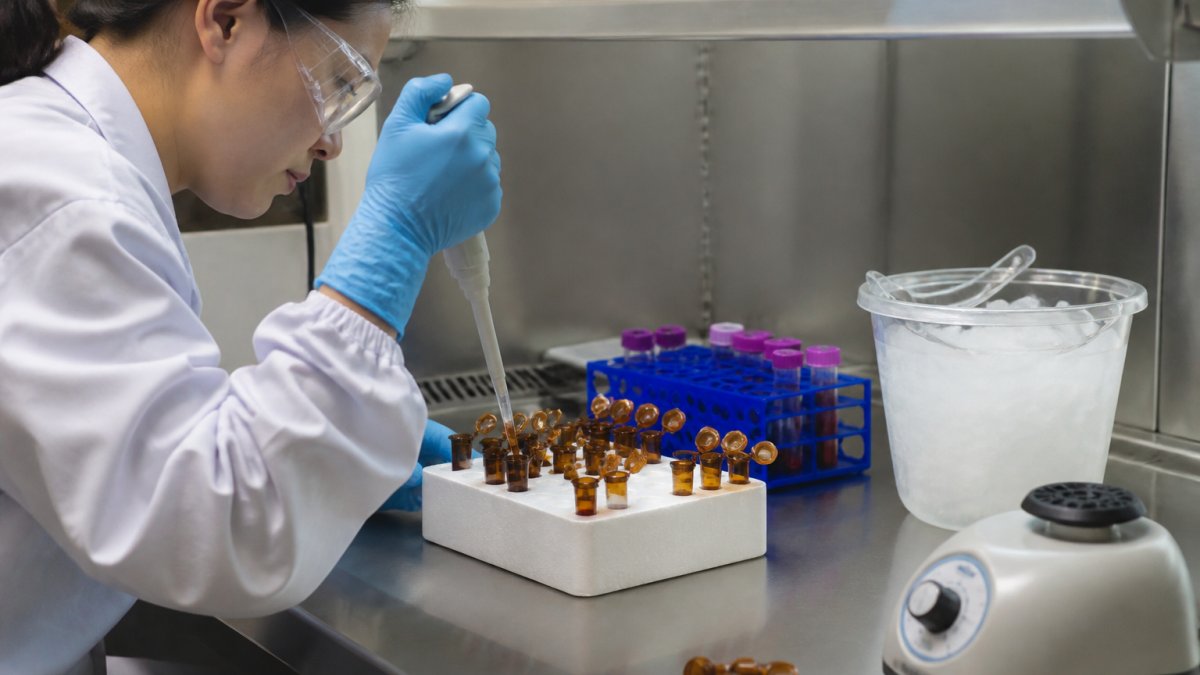
A common approach is to keep samples cold, shielded from light, and processed quickly, and many labs add an internal standard at the very start to track recovery through the whole workflow.
Specimen Types and Their Trade-offs
| Specimen | Main Advantage | Main Limitation |
|---|---|---|
| Plasma or serum | Easy to collect, widely used | Reflects circulating levels, not tissue stores |
| Whole blood | Captures cell-associated CoQ10 | More variable handling requirements |
| Tissue biopsy | Closest to the target tissue | Invasive, limited sample size |
| Cultured cells | Controlled experimental model | May not reflect in vivo conditions |
Plasma and serum are the most common choices for clinical testing; tissue and cell samples are more typical in research settings where the goal is to characterize mitochondrial dysfunction directly. Whichever you choose, record the collection tube type, time to freezing, and storage temperature, those details matter when you interpret the data.
Step 3: HPLC Analysis of Coenzyme Q10
HPLC analysis of coenzyme Q10 is the workhorse method for measuring CoQ10 concentration. It separates the compound from other sample components, then quantifies it with a detector.
The basic workflow looks like this:
- Extract CoQ10 from the sample using an organic solvent
- Add an internal standard to track recovery
- Inject the extract onto the HPLC column
- Separate oxidized and reduced CoQ10 forms
- Detect and quantify against a calibration curve
HPLC is well established, relatively affordable, and reliable when validated, but it measures concentration, not function: it tells you how much is there, not whether the mitochondria are working. For most labs asking how to measure mitochondrial coenzyme levels accurately at the concentration level, HPLC is the sensible starting point.
Step 4: LC-MS/MS Coenzyme Analysis for Higher Specificity
LC-MS/MS coenzyme analysis adds mass spectrometry to the separation step. That combination gives you higher specificity than HPLC alone.
Specificity matters because biological samples are messy: other compounds can co-elute with CoQ10 and inflate your signal.
LC-MS/MS is the better choice when:
- You need to confirm compound identity, not just quantity
- Your sample matrix is complex
- You are measuring very low concentrations
The trade-off is cost, instrument access, and the expertise required to run and maintain the method. For many research labs, it is worth it.
Step 5: Coenzyme Assay Validation and Sources of Measurement Error
Coenzyme assay validation proves your method produces accurate, repeatable results. But validating the instrument is only half the story, most CoQ10 measurement error is introduced before the sample reaches the detector.
Pre-Test Variables That Move the Number
Accuracy in CoQ10 measurement is dominated by pre-analytical variables. Control these first:
- Recent supplementation. Oral CoQ10 can raise circulating levels within days and stay elevated for weeks after a subject stops. A washout period of at least two weeks before baseline collection is common, with duration set by your protocol and documented.
- Fasting status. CoQ10 travels with lipoproteins, so a recent fatty meal shifts the reading. Standardize fasting state across all subjects and record it.
- Time of day. Diurnal and postprandial variation means a morning fasting draw is not interchangeable with an afternoon draw. Pick one and hold it constant.
Lipid Adjustment and the Oxidized-to-Reduced Ratio
Because CoQ10 circulates bound to lipoproteins, raw plasma concentration tracks blood lipid levels: two subjects with identical mitochondrial CoQ10 content can show very different plasma numbers if their cholesterol profiles differ.
The oxidized-to-reduced ratio (ubiquinone to ubiquinol) is a separate, often more informative readout. A shift toward the oxidized form can indicate oxidative stress, but the ratio is highly sensitive to handling: light, heat, and delay all push reduced CoQ10 toward the oxidized form artificially.
Validation Parameters to Prove Before Study Samples
Validate these against your actual specimen matrix, not a clean standard:
- Accuracy: does the method recover a known spiked amount?
- Precision: do repeat measurements agree within and across runs?
- Linearity: does the calibration curve hold across your expected range?
- Limit of detection and quantification: what is the smallest reliable value, and does it sit below your lowest expected sample?
Laboratory Variability
Even validated methods disagree across labs because of differences in extraction solvent, internal standard choice, calibration source, and detector settings. When comparing results across studies or batches, include a shared control sample in every batch, your only way to separate a real biological change from a batch shift.
Run a spike-and-recovery check on your actual specimen matrix, not just a clean standard. Matrix effects are where validated methods quietly fail, and they show up as systematic bias rather than random noise. Pair that with a pooled control sample run in every batch so you can detect drift over the life of a study.
A validated instrument running an unvalidated workflow still produces confident-looking wrong numbers. Validate the full path from collection tube to reported value, and document every pre-analytical variable so a reviewer can reproduce it.
Step 6: Interpreting CoQ10 Test Results in Context
A CoQ10 test result means nothing on its own, it needs a reference range, a specimen type, and a clinical or experimental context. The practical question is what to do with the number once you have it.
Reading a Reference Interval Correctly
Reference intervals are method- and specimen-specific. A plasma range from one laboratory does not transfer to a serum sample run on a different platform. Before you interpret anything, confirm three things:
- Specimen type, plasma, serum, whole blood, or tissue. The interval must match.
- Analytical method, HPLC and LC-MS/MS can produce different absolute values even on the same sample.
- Adjustment, is the interval for raw concentration or lipid-adjusted concentration?
A result outside the interval is a data point, not a diagnosis. Low plasma CoQ10 can reflect low intake, low lipid carriers, a handling artifact, or genuine tissue depletion, the blood test alone cannot tell you which.
Why Concentration Is Not Mitochondrial Function
CoQ10 concentration and mitochondrial function answer different questions. A person can show a normal plasma CoQ10 level and still have impaired mitochondrial function, because the problem may sit in the electron transport chain, mitochondrial DNA, or substrate availability rather than CoQ10 abundance. The reverse also happens: low circulating CoQ10 with functional mitochondria running on a smaller pool. If your goal is to assess mitochondrial health, pair a concentration measurement with a functional assay, concentration alone cannot tell you whether the mitochondria are producing ATP efficiently.
Medications and Supplements That Shift the Number
Several common factors move CoQ10 readings independent of mitochondrial status:
- Statin therapy. Statins reduce endogenous CoQ10 synthesis along the same pathway that produces cholesterol. A subject on a statin may show lower circulating CoQ10 without any change in mitochondrial function.
- Oral CoQ10 supplementation. Ubiquinol and ubiquinone supplements raise circulating levels, sometimes substantially, and the effect persists after the last dose. Record supplement use and washout timing.
- Blood lipid levels. Because CoQ10 rides on lipoproteins, high or low cholesterol shifts the raw number. This is the main reason lipid adjustment exists.
- Other lipid-lowering and metabolic medications. Anything that changes lipid profiles can indirectly change raw CoQ10 concentration.
When Testing Is Clinically Appropriate
CoQ10 testing is most useful for a specific clinical or research question, not as a general wellness screen. A clinician may consider it when:
- Suspected primary CoQ10 deficiency, which is a rare inherited condition with characteristic neurological and muscular features
- Unexplained mitochondrial disease symptoms being worked up alongside genetic and functional testing
- Monitoring a patient on statin therapy who reports muscle symptoms, as one input among several
- Research protocols that require a baseline and follow-up concentration measurement
A consumer-ordered CoQ10 test does not diagnose mitochondrial disease. Mitochondrial disorders are typically evaluated by a clinician using genetic testing, functional assays, and clinical findings, CoQ10 concentration is at most one supporting data point.
What to Do Next
If a result falls outside the reference interval, the next steps are usually:
- Confirm the finding with a repeat draw under the same standardized conditions, ideally at the same laboratory.
- Review the confounders, supplementation, statins, recent illness, fasting state, and handling timeline.
- Consult a clinician before changing any therapy based on a single result.
- Pair with a functional or genetic test if the clinical question is about mitochondrial disease rather than CoQ10 status.
- Document everything so the next measurement is comparable to this one.
Interpret CoQ10 results against a matched reference interval, adjust for lipids when the lab does, and treat the number as one input, never as a standalone measure of mitochondrial function. When the clinical question is about mitochondrial disease, concentration testing supports the workup but does not replace genetic and functional evaluation.
How to Measure Mitochondrial Coenzyme Levels Accurately: Common Mistakes to Avoid
Accuracy in mitochondrial coenzyme measurement comes down to discipline across the whole workflow, not one clever instrument.
The mistakes we see most often:
- Treating a plasma CoQ10 level as a proxy for mitochondrial function
- Skipping assay validation for the actual specimen matrix
- Ignoring light exposure and freeze-thaw damage
- Failing to separate oxidized and reduced CoQ10 forms
Getting the measurement right also depends on your starting material. At FROPeptides, we supply high-purity, lab-verified lyophilized coenzymes with multi-stage HPLC testing, mass spectrometry verification, and a Certificate of Analysis for every batch.
Measure concentration and function separately, validate your assay for your real sample matrix, and always report results against a matched reference range. Accuracy is a workflow property, not a single step.
Accurate mitochondrial coenzyme measurement is hard to achieve when your starting material varies from batch to batch.
Frequently Asked Questions
How are CoQ10 levels measured in a laboratory?
Clinical and research labs typically use high-performance liquid chromatography (HPLC) with UV or electrochemical detection, or LC-MS/MS for greater specificity. Both methods quantify oxidized and reduced CoQ10 in plasma, serum, or tissue. The choice depends on your required sensitivity, available instrumentation, and whether you need to distinguish ubiquinone from ubiquinol. Proper sample preparation and assay validation are essential to measure mitochondrial coenzyme levels accurately.
What sample types can be used for coenzyme Q10 analysis?
Plasma and serum are the most common specimens because they are easy to collect and reflect circulating CoQ10. Peripheral blood mononuclear cells and skeletal muscle biopsies offer a closer look at tissue-level status but require more invasive collection. Each specimen type has different reference ranges and pre-analytical handling requirements, so results are not directly interchangeable. Choose the specimen that matches your research question and validate accordingly.
What can cause inaccurate results in coenzyme testing?
Common sources of error include light exposure, delayed processing, improper storage temperature, and oxidation of ubiquinol to ubiquinone during handling. Fasting status, recent supplementation, and lipid levels also affect plasma CoQ10 concentrations. Analytical factors such as calibration drift, matrix effects, and lack of internal standards contribute as well. Controlling these pre-analytical and analytical variables is central to accurate measurement of mitochondrial coenzyme levels.
How do HPLC and LC-MS/MS compare for coenzyme analysis?
HPLC with UV or electrochemical detection is cost-effective and widely available, making it suitable for routine CoQ10 quantification. LC-MS/MS offers higher sensitivity and specificity, can simultaneously measure oxidized and reduced forms, and handles complex matrices better. For research requiring low detection limits or multiplexing with other metabolites, LC-MS/MS is often preferred. The right choice depends on your validation requirements, budget, and throughput needs.