Peptide Synthesis Services: Pricing, Quality & Vendor Review
Table of Contents
- What Defines a Quality Peptide Synthesis Service
- Custom Peptide Synthesis Cost: Pricing Models and What Drives Variation
- Peptide Purity Testing: HPLC and Mass Spectrometry Standards
- Peptide Synthesis Turnaround Time: Balancing Speed and Reliability
- Peptide Synthesis Quote Checklist: What to Evaluate Before Ordering
- Vendor Comparison: How Top Peptide Synthesis Services Stack Up
- Making Your Final Selection
- Frequently Asked Questions
Last Updated: October 10, 2026
What Defines a Quality Peptide Synthesis Service
Quality peptide synthesis services deliver three things simultaneously: purity you can verify, turnaround time you can count on, and transparency about what you’re actually paying for. Most services claim all three. Few deliver them together.
FROPeptides verifies every batch through multi-stage HPLC testing and mass spectrometry before it ships. When 2% variance tanks your results, batch-level verification isn’t optional.
Custom Peptide Synthesis Cost: Pricing Models and What Drives Variation
Custom peptide synthesis pricing depends on sequence length, purity level, synthesis scale, and what’s bundled. Vendors publish rates in different units, making direct comparison difficult without a normalized example.
Understanding Per-Amino-Acid Pricing
Most vendors quote per-amino-acid (AA) rates, but this is only a starting point.
Per-AA rates mislead: a 20-amino-acid peptide at $3/AA appears to cost $60 but ignores purification, analytical testing, and minimum order charges. At 95% purity and 10 mg scale, it may cost $180-$300.
Like-for-Like Cost Comparison: A Worked Example
Request quotes for the same specification across multiple vendors to evaluate fairly:
Specification: 25-amino-acid peptide, 95% purity, 10 mg scale, includes HPLC and mass spectrometry analysis.
- Biomatik: 25 AA × $3/AA = $75 base, plus purification (
$100-$150) and analytical testing ($50-$75) = estimated $225-$300 - Boster Bio: 25 AA × $5.50/AA (intermediate purity at 10 mg) = $137.50 base, plus analytical testing (~$50) = estimated $187.50-$250
- ProteoGenix: 25 AA × $2.12/AA = $53 base, plus purification and analytical testing (~$150-$200) = estimated $203-$253
- ABM: $250 minimum (includes purification and mass spec) = $250 flat
The lowest per-AA rate does not yield the lowest total cost when purification and testing are added.
Scale and Purity: The Hidden Cost Multipliers
Purity level shifts cost dramatically: crude peptides (70-80%) cost 40-60% less than 95% purity, which costs 30-50% less than >98% ultra-pure material. A 30-AA peptide at crude purity may cost $150; at 99% purity, $400-$500. Scale also matters: ordering 1 mg versus 50 mg typically increases cost by 20-40%. Bulk orders (100+ mg) often qualify for 10-20% volume discounts.
What’s Included in the Quote: The Transparency Test
Vendors worth using disclose what’s bundled.
Hidden Costs to Ask About
Confirm whether these are included or billed separately: purification ($50-$150), analytical testing ($30-$100), minimum order charges ($150-$300), rush fees (+30-50%), modifications ($50-$200 each), resynthesis policy, and temperature-controlled shipping ($0-$75).
Request a full, itemized quote for your exact sequence, purity, scale, and any modifications before committing. Ask specifically: “Is purification included? Are HPLC and mass spec included? What is your resynthesis policy if purity fails?” Per-amino-acid rates are useful for rough comparison but do not tell you the final invoice.
Total Cost of Ownership Framework
The cheapest per-AA rate is not the lowest total cost. Compare vendors using this checklist:
| Factor | Impact | What to Ask |
|---|---|---|
| Per-AA rate | Baseline only | “What is your rate for my sequence length and purity?” |
| Purification included | $50-$150 swing | “Is HPLC purification included in the quoted price?” |
| Analytical testing included | $30-$100 swing | “Are HPLC and mass spec analysis included?” |
| Minimum order charge | $150-$300 swing | “Is there a minimum order charge? If so, does it apply to my order?” |
| Resynthesis policy | $0-$400 swing | “If the batch fails purity, do you resynthesize at no charge?” |
| Modification costs | $50-$200 per mod | “What is the cost for [acetylation/amidation/labeling]?” |
| Rush fees | +30-50% | “What is the cost for 5-day turnaround?” |
| Shipping method | $0-$75 swing | “Is temperature-controlled shipping included or extra?” |
A vendor quoting a lower per-amino-acid rate but charging separately for purification, analysis, and resynthesis on failure may be more expensive than one quoting a higher rate with bundled services and free resynthesis.
Peptide Purity Testing: HPLC and Mass Spectrometry Standards
HPLC (high-performance liquid chromatography) and mass spectrometry are the two tests that matter. HPLC shows the percentage of desired peptide versus impurities; mass spectrometry confirms the molecular weight is correct.
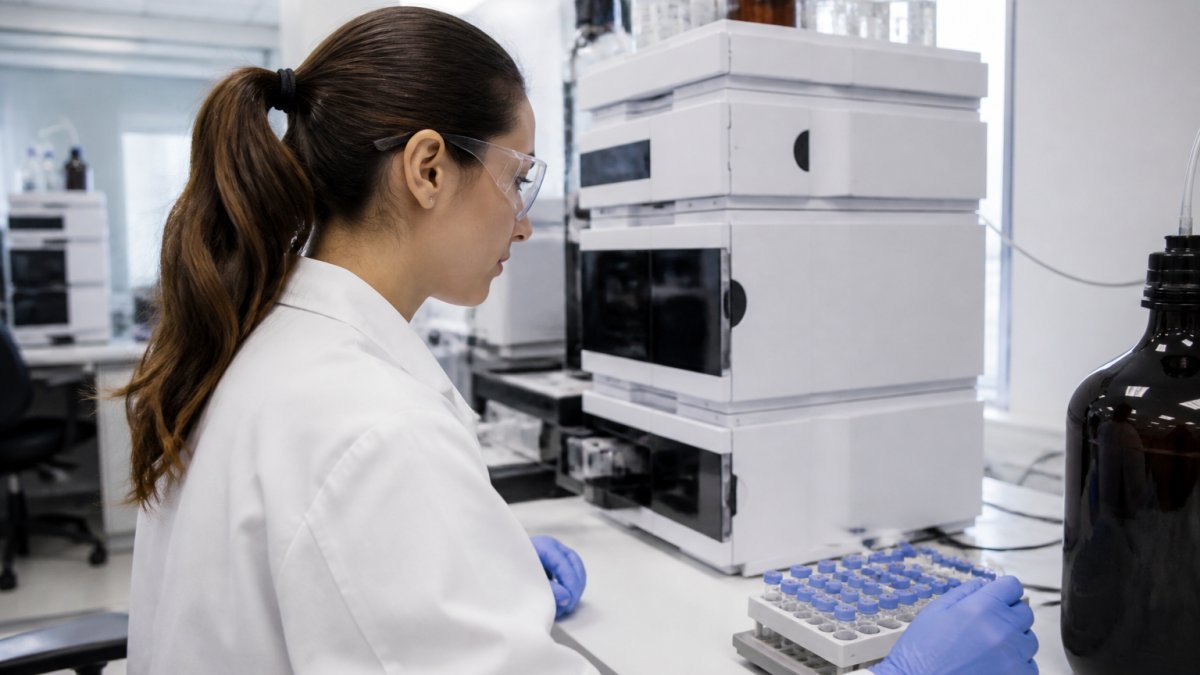
Vendors offer crude peptides (70-80%), intermediate purity (90-95%), and ultra-pure material (>98%). Crude suffices for binding studies or cell culture; quantitative assays or diagnostics require >95% purity to avoid noise that corrupts data.
HPLC shows peak areas: a single sharp peak indicates purity; multiple peaks indicate contamination. Mass spectrometry confirms the molecular ion peak matches your calculated mass within 0.1 Da.
Vendors worth using provide a Certificate of Analysis (CoA) with every batch showing HPLC and mass spec data. FROPeptides includes multi-stage HPLC testing and mass spectrometry verification with full CoA documentation.
Never accept a peptide without analytical data. If a vendor quotes purity but doesn’t provide HPLC and mass spec results, the purity claim is unverified. This is the single biggest quality shortcut vendors take.
Peptide Synthesis Turnaround Time: Balancing Speed and Reliability
Turnaround time ranges from 5 business days for standard sequences to 3-4 weeks for difficult or modified peptides. Standard turnaround is typically 7-14 business days for sequences under 50 amino acids. Longer sequences, high purity requirements, or difficult amino acid combinations (cysteine or proline-rich) extend timelines. Speed without verification is worthless, a peptide failing purity testing costs more time than one taking longer but passing first time.
Temperature-controlled shipping protects peptides during transit. Verify this with any vendor, especially for regions with extreme heat.
Peptide Synthesis Quote Checklist: What to Evaluate Before Ordering
Before submitting a purchase order, confirm these five points with your vendor:
Sequence and scale. Provide your exact amino acid sequence, desired quantity (in mg or µmol), and target purity level. Vague requests return vague prices.
Purity and analytical testing. Ask whether the quoted price includes HPLC analysis and mass spectrometry, and request both datasets in the CoA.
Turnaround and shipping. Confirm the synthesis timeline, shipping method, and whether temperature-controlled shipping is standard or an add-on.
Batch traceability. Request batch-level documentation and lot numbers. Batch-traceable sourcing is non-negotiable for reproducible science.
Modification and labeling capability. Confirm the vendor offers N-terminal acetylation, C-terminal amidation, fluorescent labels, or isotopic enrichment, and the cost impact.
The best quote isn’t always the cheapest. A low price on crude peptides with no analytical data costs more in failed experiments than a higher price on verified, high-purity material with full documentation.
Vendor Comparison: How Top Peptide Synthesis Services Stack Up
Vendor selection should not be based on price alone. The best vendor depends on your sequence complexity, purity requirements, timeline, and tolerance for quality variance.
Choosing the right vendor requires weighing price against four risk factors: Sequence Difficulty (straightforward sequences work with any vendor; difficult sequences require technical support), Purity Criticality (crude suffices for preliminary work; diagnostics require >95% purity with verified analytical data), Resynthesis Policy (ask whether failed batches are resynthesized at no charge), and Batch Consistency (request lot numbers, batch-specific CoA documentation, and storage recommendations).
Before committing to any vendor, ask these three questions that are rarely answered in public materials:
- “What is your resynthesis policy if the batch fails purity testing?”
- “Do you provide lot-specific batch documentation and storage recommendations?”
- “If I need to reorder the same peptide in 6 months, can you synthesize from the same batch or guarantee lot-to-lot consistency?”
The answers to these questions often matter more than the per-AA rate.
Comparison Matrix: Price vs. Risk
| Vendor | Per-AA Baseline | Bundled Services | Sequence Support | Purity Guarantee | Resynthesis Policy | Best Use Case |
|---|---|---|---|---|---|---|
| Biomatik | $3/AA | Partial | Limited | Published range | Not disclosed | Library screening, crude purity |
| Boster Bio | $3.50/AA | Partial | Limited | Published range | Not disclosed | Straightforward sequences |
| ProteoGenix | $2.12/AA | No | Excellent | Not disclosed | Not disclosed | Difficult sequences |
| ABM | $250 min | Yes (purif + MS) | Limited | Not disclosed | Not disclosed | Small orders, short peptides |
| GenScript | Custom quote | Comprehensive | Excellent | Regulatory-grade | Not disclosed | Manufacturing scale, complex mods |
Start with price, but do not stop there. A vendor quoting a lower per-amino-acid rate with separate charges for purification, no analytical data, and no resynthesis guarantee may be more expensive than one quoting a higher rate with bundled services and free resynthesis. Always request a full, itemized quote including purification, analytical testing, and resynthesis policy.
Making Your Final Selection
Choosing a peptide synthesis vendor depends on three decisions: required purity, timeline, and analytical verification needs. Crude peptides suffice for preliminary work; diagnostic assays or peer-reviewed publications require high purity with verified analytical data. Speed matters less than quality, a peptide failing purity testing costs more time than one taking longer but passing first time. Temperature-controlled shipping, batch-level traceability, and full analytical documentation should be standard, not premium add-ons.
Frequently Asked Questions
How much does custom peptide synthesis typically cost?
Custom peptide synthesis pricing depends on sequence length, purity level, and synthesis scale. Most vendors charge per amino acid. Many services impose a minimum charge per peptide to cover setup costs. Request a quote from your vendor with your specific sequence to get accurate pricing.
What purity level should I request for my research peptide?
Crude peptides (70-80% purity) suit initial screening and assay development. Standard purification (85-95%) works for most molecular research. High-purity peptides (95-99%) are essential for sensitive assays, bioactivity studies, and work destined for peer-reviewed publication. Request analytical testing data (HPLC and mass spectrometry) to verify the stated purity before use in critical experiments.
What quality-control tests should a peptide synthesis provider include?
Reputable vendors perform multi-stage HPLC to confirm purity and detect impurities, mass spectrometry to verify molecular weight, and provide a Certificate of Analysis documenting results for every batch. Some offer additional tests like amino acid analysis or endotoxin screening for specialized applications. Always request batch-level analytical data before accepting delivery, especially for research that will be published or used in regulatory submissions.
How long does custom peptide synthesis typically take?
Standard turnaround for most vendors varies for routine sequences. Longer sequences, high-purity requirements, or complex modifications may extend timelines. Express options are available but often carry surcharges. Confirm turnaround expectations in your quote and verify that the stated timeline includes analytical testing and Certificate of Analysis generation, not just synthesis completion.
What should I look for in a peptide synthesis vendor to ensure batch-to-batch consistency?
Evaluate vendors on their quality-control infrastructure: multi-stage HPLC testing, mass spectrometry verification, and documented batch traceability. Review their Certificate of Analysis format to ensure it includes actual analytical data, not just pass/fail statements. Ask for references from labs running sensitive assays and request sample analytical reports. Vendors with temperature-controlled storage and shipping, rigorous documentation, and a track record of consistent purity across batches reduce variability in your downstream research.
When your research demands verified purity and analytical rigor, FROPeptides delivers high-purity, lab-verified research peptides with multi-stage HPLC testing and mass spectrometry verification on every batch. Our Certificate of Analysis documentation and temperature-controlled dispatch ensure compound integrity for your molecular analysis. Shop Now and experience the difference rigorous quality control makes in your research outcomes.