Order Lyophilized Coenzymes for Analysis: A Lab Guide
Table of Contents
- Why Order Lyophilized Coenzymes for Your Analytical Research
- Understanding Coenzyme Types and Their Analytical Applications
- Is High Purity NAD+ Worth It for Analysis
- HPLC Testing for Coenzyme Purity: What You Need to Know
- Lyophilized Coenzyme Storage Requirements and Best Practices
- Sample Preparation and Reconstitution Protocols
- Sourcing and Ordering: What to Look for in a Supplier
- Frequently Asked Questions
Last Updated: September 2, 2026
Why Order Lyophilized Coenzymes for Your Analytical Research
When your lab depends on precise molecular analysis, reagent purity determines whether your results are publishable or questionable. Lyophilized coenzymes preserve molecular integrity across extended storage periods and eliminate batch-to-batch variability that plagues liquid formulations. Research teams across academic institutions and pharmaceutical discovery labs have resolved analytical inconsistencies by switching to high-purity lyophilized coenzymes. Freeze-drying removes water that accelerates degradation, extends shelf life from weeks to years, and allows precise concentration control, essential for peer-reviewed publications and regulatory submissions where purity impacts conclusions.
Below, we’ll walk you through what makes lyophilized coenzymes essential for analytical work, how to evaluate purity standards, and how to source materials that meet specifications.
Understanding Coenzyme Types and Their Analytical Applications
Coenzymes function as essential cofactors in enzyme-catalyzed reactions, and their purity directly determines assay sensitivity and reproducibility. The most commonly ordered lyophilized coenzymes include NAD+ (nicotinamide adenine dinucleotide), NADP+, ATP, CoA (coenzyme A), and flavin adenine dinucleotide (FAD).
NAD+ serves as an electron acceptor in metabolomics workflows, enzyme kinetics studies, and cellular redox assays. NADP+ operates in reductive biosynthetic pathways, essential for photosynthesis research and pentose phosphate pathway analysis. ATP supports kinase assays and phosphorylation studies. Coenzyme A participates in acyl transfer reactions and fatty acid oxidation assays. FAD operates in oxidative enzyme assays and flavoprotein research.
The analytical application determines which coenzyme you need and what purity threshold matters. A metabolomics study tracking NAD+ levels demands higher purity than general enzyme screening because contaminants directly interfere with mass spectrometry detection. In LC/MS/MS workflows, even minor impurities suppress ionization or create background noise that masks target analytes. Understanding these distinctions before ordering prevents purchasing wrong materials or overpaying for unnecessary purity levels.
Is High Purity NAD+ Worth It for Analysis
This question cuts to the heart of analytical decision-making: does the cost premium for 99%+ purity improve your results?
The answer depends entirely on your detection method. Simple enzyme activity assays measured colorimetrically tolerate NAD+ purity above 95%. However, quantitative analysis, particularly LC/MS/MS or HPLC workflows, makes purity non-negotiable. Mass spectrometry ionizes individual molecules, meaning contaminants compete for ionization, suppress signal, and introduce background noise obscuring target peaks.
Research labs using cellular redox assays or metabolomics consistently report that high-purity NAD+ (99%+) produces signal-to-noise ratios 3-5 times better than standard-grade material (peer-reviewed research). This translates to lower detection limits, tighter confidence intervals, and results withstanding peer review. The cost difference between 95% and 99.5% purity typically ranges 15-60% depending on batch size, but for quantitative work, that premium often justifies itself through improved data quality.
The real problem emerges when suppliers claim high purity without rigorous testing. A vendor stating “99% purity” without HPLC chromatography and mass spectrometry confirmation is making an unverifiable claim. Batch-level Certificates of Analysis document exactly what purity you received.
| NAD+ Purity Grade | Typical Applications | Detection Methods | Relative Cost |
|---|---|---|---|
| 90-95% | Screening assays, enzyme kinetics | Colorimetric, fluorescence | Baseline |
| 95-98% | General biochemical assays | HPLC, spectroscopy | +15-25% |
| 98-99.5% | Quantitative analysis, metabolomics | LC/MS/MS, high-resolution HPLC | +40-60% |
| 99.5%+ | Regulatory submissions, publication-grade | Trace analysis, isotope labeling | +60-100% |
Request the actual HPLC chromatogram from your supplier, not just a purity percentage. A legitimate vendor will provide this without hesitation. If they won’t, that’s a red flag.
HPLC Testing for Coenzyme Purity: What You Need to Know
HPLC (high-performance liquid chromatography) is the analytical standard for verifying coenzyme purity because it separates individual molecular species and quantifies each by area under the curve. A typical HPLC method for NAD+ uses a C18 reversed-phase column with UV detection at 260 nm, separating NAD+ from degradation products like nicotinamide, nicotinic acid, and ADP (peer-reviewed research).
However, several pitfalls emerge in practice. First, HPLC measures what’s present at analysis time, not whether material will degrade during storage. A vial showing 99.2% purity on arrival might drop to 96% after three months without proper desiccation or temperature control. Second, HPLC alone doesn’t identify unknown impurities, a 0.8% peak could be harmless salt or problematic degradation product. Third, different HPLC methods produce different purity values for the same sample.
This is why rigorous suppliers pair HPLC with mass spectrometry. LC/MS/MS confirms molecular weight and identifies impurities by mass-to-charge ratio, confirming you actually have NAD+ rather than a structural isomer.
When evaluating supplier analytical data, look for:
- HPLC chromatogram showing baseline separation from known impurities
- Mass spectrometry data confirming molecular ion and isotope pattern
- Quantitative purity percentage with specific HPLC method documented
- Detection method and wavelength specified
- Analysis date and batch number matching your vial
- Reference standards used for comparison
HPLC purity is only as meaningful as the method that produced it. Always request the chromatogram and detailed method parameters.
Lyophilized Coenzyme Storage Requirements and Best Practices
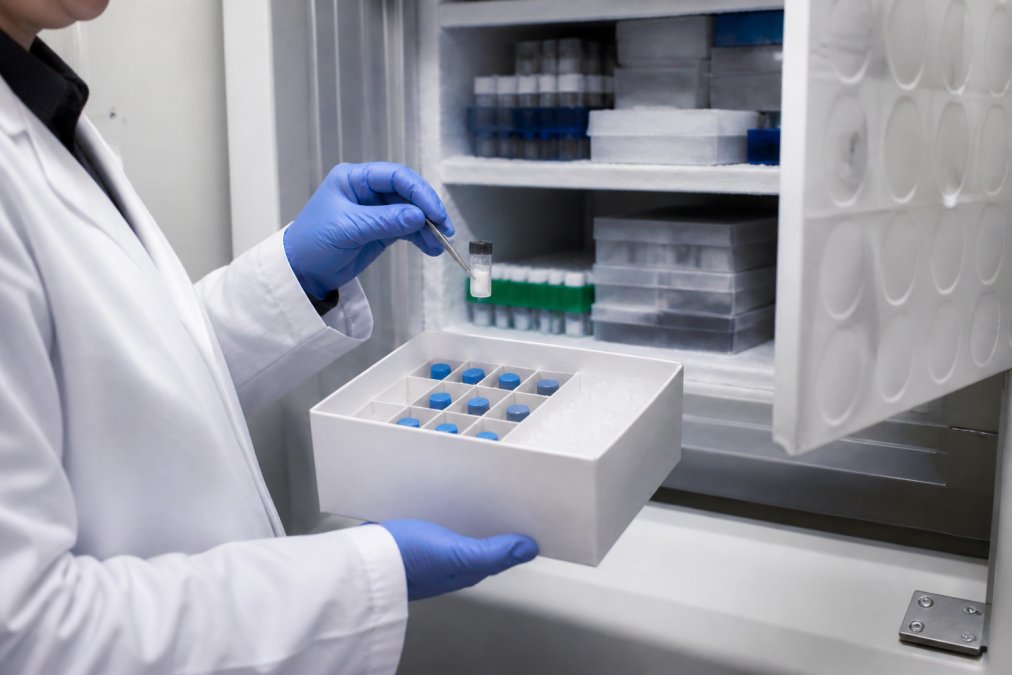
The moment your lyophilized coenzymes arrive, storage conditions determine whether they maintain purity or degrade silently. Lyophilization removes water, but residual moisture (typically 2-5%) remains trapped in the powder matrix, accelerating chemical degradation if exposed to heat, light, or atmospheric moisture.
Proper storage requires three elements: cold temperature (-20°C or -80°C), darkness, and low humidity. Fluctuating temperatures cause the powder to absorb and release moisture repeatedly, accelerating degradation. Light exposure, particularly UV wavelengths, initiates photochemical degradation in NAD+. Store vials in opaque containers or wrapped in aluminum foil. Humidity is critical, if you remove a vial from -20°C and open it at room temperature, condensation forms immediately on the cold powder, introducing water that initiates degradation. Allow vials to equilibrate to room temperature while still sealed before opening.
Once reconstituted in buffer, lyophilized coenzymes degrade more rapidly. Reconstituted NAD+ typically maintains acceptable purity for 2-4 weeks at 4°C (peer-reviewed research). Aliquoting into smaller volumes and freezing at -20°C extends usable life to several months.
Common storage mistakes include storing vials in regular freezers with defrost cycles, keeping vials on benchtops between uses, failing to reseal tightly, storing reconstituted material at 4°C beyond one month, and exposing vials to repeated freeze-thaw cycles.
Sample Preparation and Reconstitution Protocols
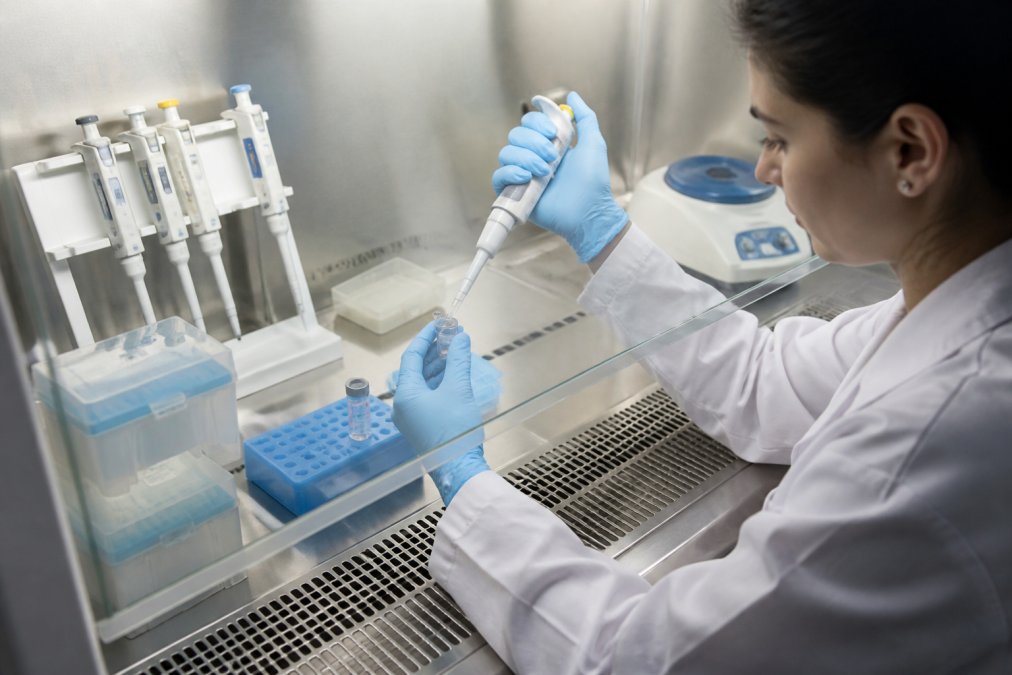
Reconstitution, dissolving lyophilized coenzymes in buffer, is where many labs introduce errors compromising analytical results. The process requires attention to buffer composition, pH, osmolarity, and stabilizing agents.
Start with the right buffer. Phosphate-buffered saline works for general applications, but coenzyme-specific buffers often perform better. For NAD+-dependent assays, Tris buffer at pH 7.4-8.0 maintains stability better than phosphate at lower pH. The buffer should be sterile and free from reducing agents like DTT that oxidize NAD+ to NADH.
Reconstitution concentration depends on your assay. Most enzyme kinetics assays use NAD+ at 0.5-2 mM final concentration. For LC/MS/MS quantification, prepare a 10 mM stock solution, then dilute to working concentrations (1-100 µM) immediately before analysis.
Temperature control during reconstitution matters. Adding cold buffer to lyophilized powder can trap air pockets creating uneven dissolution. Room-temperature buffer mixes more uniformly. Allow the vial to sit 5-10 minutes after adding buffer, then gently invert to ensure complete dissolution.
Once reconstituted, add sodium azide (0.02%) as preservative if storing beyond a few days. Use sterile technique to prevent bacterial contamination. A standardized protocol prevents batch-to-batch variation:
- Remove the vial from -20°C and allow it to warm to room temperature while sealed (5-10 minutes)
- Add sterile buffer at room temperature using sterile technique
- Allow the vial to sit undisturbed for 5 minutes
- Gently invert 5-10 times to ensure complete dissolution
- Transfer to a sterile, labeled tube
- Record reconstitution date, buffer used, and final concentration
- Store at 4°C for short-term use (up to 4 weeks) or aliquot and freeze at -20°C
- Verify concentration using UV spectroscopy (NAD+ absorbance at 260 nm with extinction coefficient 17,400 M⁻¹cm⁻¹)
Never refreeze a reconstituted coenzyme solution after thawing. Each freeze-thaw cycle introduces ice crystal formation that damages molecules. Prepare small aliquots and discard thawed material not used within your assay window.
Sourcing and Ordering: What to Look for in a Supplier
The supplier you choose determines whether you receive what’s promised or discover purity problems only after analytical work begins. When ordering lyophilized coenzymes for analysis, evaluate suppliers on documentation, testing rigor, and batch traceability.
Start with batch-level Certificates of Analysis. A legitimate supplier provides a CoA for every batch showing HPLC chromatography, purity percentage, mass spectrometry data, and specific analytical methods. The CoA should include batch number, manufacturing date, and analysis date. If a supplier offers only generic “typical purity” statements without batch-specific documentation, their quality control is inadequate.
Temperature-controlled shipping is non-negotiable. Lyophilized coenzymes tolerate brief room-temperature exposure, but extended periods above 25°C accelerate degradation. Quality suppliers use insulated packaging with ice packs maintaining 2-8°C throughout shipping. Request tracking showing temperature monitoring. If material arrives warm or without temperature documentation, you have no assurance it maintained specified purity.
Batch-level traceability means you can trace your vial back to specific synthesis lot, purification batch, and analytical testing. This matters if you discover problems with results. A supplier who can identify your specific batch gives actionable information; one who can only reference “standard inventory” leaves you guessing.
FROPeptides maintains complete batch traceability for every coenzyme order, with multi-stage HPLC and mass spectrometry verification documented on the Certificate of Analysis. Temperature-controlled storage and shipping ensure material arrives in specification.
Pricing varies by purity grade, batch size, and delivery timeline. Request quotes based on specific needs rather than comparing list prices. Volume discounts typically apply for recurring orders.
| Supplier Evaluation Criterion | What to Look For | Red Flag |
|---|---|---|
| Batch Documentation | Batch-specific CoA with HPLC and MS data | Generic purity claims without chromatograms |
| Shipping Control | Temperature monitoring with data logger | Standard packaging without temperature control |
| Traceability | Batch number traceable to synthesis and testing | No ability to identify your specific batch |
| Testing Methods | Multi-stage HPLC + mass spectrometry | Single analytical method only |
| Response Time | CoA provided with shipment or within 24 hours | CoA available “upon request” after delays |
| Inventory Status | Stock available for immediate dispatch | Backorders or extended lead times |
When your analytical work depends on coenzyme quality, ordering from a supplier prioritizing documentation, testing rigor, and temperature control isn’t an expense, it’s insurance against wasted time troubleshooting results that fail because reagents weren’t what you thought. FROPeptides delivers research-grade lyophilized coenzymes with batch-level verification and consistent purity, giving you the foundation for reproducible, publishable analytical research.
Get started with FROPeptides and access high-purity lyophilized coenzymes verified by multi-stage HPLC testing and mass spectrometry for every batch.
Frequently Asked Questions
Why is lyophilization preferred for coenzyme storage?
Lyophilization removes water while preserving molecular structure, dramatically extending shelf life and stability. Lyophilized coenzymes resist degradation from oxidation and hydrolysis that compromise liquid formulations. This freeze-dried format also simplifies shipping and storage, allowing room-temperature stability when properly sealed. For analytical work requiring batch-to-batch consistency, lyophilized powder maintains purity standards far longer than aqueous solutions.
How do you verify the purity of research-grade coenzymes?
High-purity coenzymes undergo multi-stage analytical methods including HPLC purification, mass spectrometry analysis, and quantitative assessment. LC/MS/MS workflows confirm molecular identity and detect impurities at parts-per-million levels. Reputable suppliers provide Certificates of Analysis documenting purity percentages (typically 99%+ for research grade) and batch-specific test results. Always request CoA documentation before accepting delivery to confirm your compound meets analytical requirements.
What analytical methods are standard for quantifying coenzymes?
LC/MS/MS analysis is the gold standard for coenzyme quantification, offering sensitivity and specificity for biochemical assays. HPLC with UV detection measures coenzyme concentration based on absorbance profiles specific to each cofactor type. Reference compounds and purity standards enable precise quantitative analysis and metabolomics studies. Sample preparation using perchloric acid extraction or buffer-based protocols ensures accurate measurement without interference from cellular components or contaminants.
What should I check before ordering lyophilized coenzymes for analysis?
Confirm the supplier provides batch-level Certificates of Analysis with HPLC and mass spectrometry data. Verify purity percentage meets your assay requirements (typically 99%+ for analytical work). Check storage conditions and temperature-controlled shipping to prevent degradation during transit. Request information on reconstitution protocols, shelf life, and buffer compatibility for your specific enzyme cofactor applications. Ensure the supplier offers fast turnaround and replacement guarantees if compounds arrive compromised.