
Maintaining Cold Chain for Research Peptides
Table of Contents
- Understanding Cold Chain Logistics for Peptides
- Peptide Storage Temperature Guidelines
- Impact of Temperature Excursions on Peptide Purity
- Cold Chain Monitoring Tools for Laboratories
- Shipping Protocols and Dry Ice Best Practices
- Handling and Dissolution Protocols
- Validating Cold Chain Integrity
- Frequently Asked Questions
Last Updated: August 30, 2026
Understanding Cold Chain Logistics for Peptides
Maintaining cold chain for research peptides means preserving temperature-sensitive compounds through controlled storage, handling, and transport to prevent degradation and preserve molecular integrity. A broken cold chain can mean months of wasted effort and unreliable research results. Temperature excursions, even brief ones, trigger oxidation and thermal degradation that compromise potency and shelf-life.
Cold chain logistics encompasses every touchpoint from the supplier’s freezer to your lab bench. At FROPeptides, we’ve invested heavily in this infrastructure because peptide stability depends on maintaining precise temperature control at every stage. Peptide molecules are held together by specific bonds that break down when exposed to heat, humidity, or light. Lyophilized peptides are more stable than reconstituted ones, but both require careful handling.
This guide covers the technical practices, monitoring tools, and validation methods that ensure your peptides arrive intact and remain stable throughout your research project.
Peptide Storage Temperature Guidelines
The ideal storage temperature depends on peptide form and your planned timeline. Applying one-size-fits-all rules instead of matching storage conditions to your specific compound and usage pattern is a common mistake.
Lyophilized Peptide Storage
Lyophilized peptides are dried, powder-form compounds with water removed under vacuum, making them significantly more stable than reconstituted counterparts. Most lyophilized peptides can be stored at -20°C for 12 to 24 months or longer, depending on sequence and conditions (peer-reviewed research). Storage at -80°C extends shelf-life considerably by slowing molecular movement and halting oxidation pathways.
The real risk for lyophilized peptides is moisture. These compounds are hygroscopic and absorb water from air. Once moisture infiltrates your vial, oxidation accelerates rapidly. Lyophilized peptides should arrive in sealed vials under inert atmosphere (usually nitrogen) with desiccant packs. Keep the vial sealed until reconstitution.
Storage at 4°C is possible for short-term use (a few weeks to months) but not recommended for long-term storage, as warmer temperatures accelerate degradation and condensation becomes a concern with repeated access.
Reconstituted Peptide Stability
Once dissolved in buffer solution, reconstituted peptides are far more vulnerable to degradation because they’re exposed to oxygen and subject to microbial contamination. Most reconstituted peptides should be stored at -20°C and used within 2 to 4 weeks. The buffer composition matters: phosphate-buffered saline (PBS) is standard, but some peptides require specialized buffers.
Storing reconstituted peptides at room temperature “just for a few days” can reduce potency by 10-15% for many sequences. If you need frequent access, prepare small aliquots and keep bulk stock at -20°C to minimize freeze-thaw cycles, which damage peptide integrity through ice crystal formation and osmotic stress.
Limit reconstituted peptides to 3-4 freeze-thaw cycles maximum. Beyond that, prepare fresh aliquots from your lyophilized stock.
Impact of Temperature Excursions on Peptide Purity
A temperature excursion occurs when peptides are exposed to temperatures outside their recommended range. The impact depends on deviation magnitude, exposure duration, and the peptide’s inherent thermal stability.
Thermal Degradation and Oxidation Pathways
Heat accelerates chemical reactions. Elevated temperature provides energy that breaks peptide bonds and initiates oxidation of sensitive amino acids like methionine and tryptophan. A 10°C increase in temperature roughly doubles the degradation rate for many peptides (peer-reviewed research). A lyophilized peptide stored at -20°C might degrade at 1-2% per month under ideal conditions; the same peptide at 25°C might lose 5-10% potency per week.
Oxidation is particularly problematic because it’s difficult to detect without analytical testing. Oxidized peptides may have altered binding properties, reduced bioactivity, or changed chromatographic profiles. HPLC analysis reveals oxidized peaks as new signals alongside your target compound.
Humidity during temperature excursions amplifies damage. When a sealed vial warms, condensation can form inside if not perfectly sealed. Moisture triggers hydrolysis and oxidation simultaneously. Excursions during humid conditions are more damaging than equivalent temperature swings in dry environments.
Recovery Protocols After Temperature Excursions
Not every excursion renders your peptide unusable. For lyophilized peptides, a brief excursion to room temperature (18-25°C for a few hours) typically causes minimal damage if the vial remained sealed, with possible 2-5% potency loss. Longer exposures or temperatures above 30°C require more caution.
The practical approach is to test, not guess. Request a Certificate of Analysis (CoA) that includes HPLC purity data from your supplier. At FROPeptides, we provide batch-level CoAs with every order, including multi-stage HPLC testing and mass spectrometry verification. Compare the current HPLC profile to your original CoA. If purity has dropped more than 2-3%, the peptide may not meet your experimental requirements.
For reconstituted peptides that experienced temperature excursion, prepare a fresh aliquot from your lyophilized stock rather than risk compromised results. Document every excursion to help identify whether future issues stem from handling problems or inherent batch instability.
Cold Chain Monitoring Tools for Laboratories
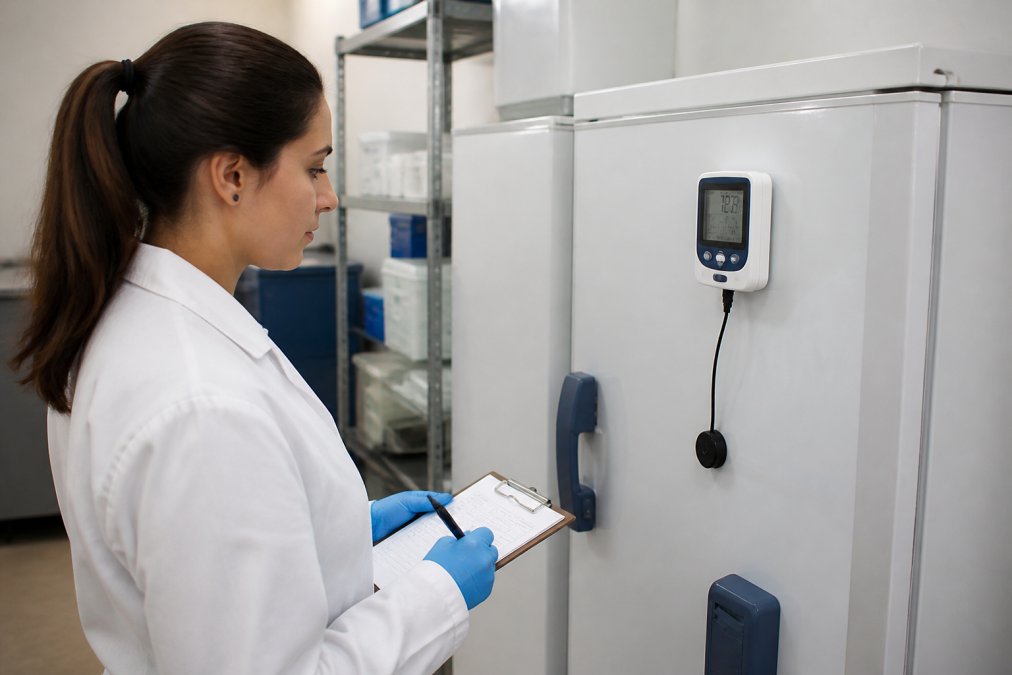
Real-time temperature monitoring transforms cold chain management from hope-and-pray into data-driven practice. Modern laboratories use hardware sensors, cloud-based logging systems, and alarm protocols to catch problems before they destroy compounds.
Temperature data loggers record temperature at set intervals (typically every 15 to 60 minutes) and store data internally or transmit wirelessly to a cloud platform. Placing a logger in your -80°C freezer creates a continuous record of whether your storage unit maintains -80°C or drifts toward -60°C. Many include alarm thresholds that trigger alerts if temperature deviates outside your specified range.
Wireless data loggers that transmit to cloud dashboards offer real-time visibility. You can check freezer temperature from your phone and receive notifications if temperature deviates. Historical graphing helps identify patterns, such as temperature spikes when HVAC systems cycle.
Backup power systems are essential. If your -80°C freezer loses power for even a few hours, internal temperature can rise significantly. Uninterruptible power supplies (UPS) keep critical freezers running during brief outages.
Temperature mapping validates your cold chain infrastructure. Place multiple data loggers at different locations inside your freezer to reveal true conditions and confirm that storage meets specifications throughout the unit.
Shipping Protocols and Dry Ice Best Practices
Shipping temperature-sensitive peptides requires careful planning to maintain target temperature from supplier through transit to your lab, accounting for seasonal variations and local climate.
Packaging Materials and Insulation
Insulation quality determines how long peptides remain cold during transit. Standard foam coolers provide basic insulation but may be insufficient for shipments longer than 24 hours, especially during warm months. Many suppliers use phase-change materials (gel packs that absorb and release heat at specific temperatures) combined with high-density foam or vacuum-insulated containers.
Dry ice is the most effective coolant for maintaining ultra-cold temperatures during shipping. Dry ice sublimes at -78.5°C, maintaining lyophilized peptides well below degradation threshold for 48-72 hours, depending on insulation and ambient conditions. However, dry ice continues to sublime throughout shipping, so insulation quality matters enormously. Poorly insulated shipments can warm up as dry ice depletes.
Professional shipping services use validated packaging systems tested to confirm peptides remain at target temperature for expected transit time under worst-case conditions. FROPeptides uses temperature-controlled shipping with validation data for every route and season.
Gel packs are a lower-cost alternative for shorter shipments (24 hours or less) and for maintaining 4°C or -20°C temperatures. For cross-country or international shipping, or summer shipments, dry ice is the safer choice.
Climate-Specific Shipping Strategies
Your shipping strategy should account for climate at origin and destination, plus seasonal variation. Warm climates or summer shipping require dry ice with high-quality insulation. For cold climates and winter shipping, gel packs are often sufficient for 24-48 hour transits.
International or long-distance shipping requires strong insulation and sufficient coolant to maintain temperature throughout 3-4 day transits. Some international shippers include tracking that logs temperature at various points, providing visibility into whether cold chain held.
Document shipment conditions. Record ambient temperature, insulation condition, and any visible damage to cooling materials. Over time, you’ll develop expectations for regular shipping routes and can flag unexpected warm arrivals with your supplier.
Handling and Dissolution Protocols
How you handle peptides after arrival determines whether the supplier’s cold chain efforts pay off. A vial that arrived in perfect condition can degrade within minutes through improper handling.
When your shipment arrives, immediately transfer peptides to appropriate storage. Lyophilized peptides should go directly into your -20°C or -80°C freezer. Don’t leave them on the bench while processing paperwork.
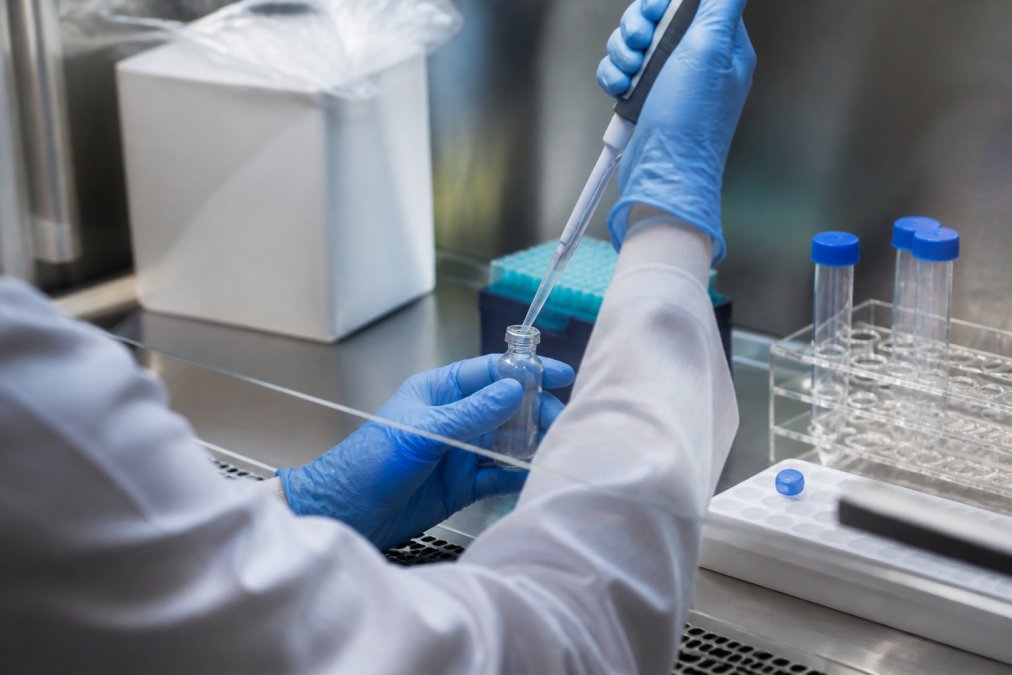
Reconstitution should be done under controlled conditions using a biosafety cabinet or laminar flow hood to minimize contamination and oxidation. Prepare buffer solution fresh if possible, or use recently opened, properly stored buffer. Add buffer slowly to the lyophilized peptide to avoid osmotic stress. Many protocols recommend letting the vial sit for 5-10 minutes after initial buffer addition, then gently mixing.
If your peptide includes sensitive amino acids like methionine or tryptophan, consider adding antioxidants to your buffer. Ascorbic acid or dithiothreitol (DTT) slow oxidation. Check your peptide’s technical documentation for recommendations.
Prepare only the amount of reconstituted peptide needed for immediate use. Aliquot the remainder into smaller vials and return to -20°C storage immediately. Small aliquots minimize air exposure and reduce freeze-thaw cycles. Label each aliquot with reconstitution date and expected stability window.
Limit reconstituted peptides to 3-4 thaw cycles maximum. If doing frequent assays, maintain one aliquot at 4°C for active use (within 2-4 week stability window) while keeping bulk stock at -20°C.
Validating Cold Chain Integrity
Validation confirms that your cold chain actually maintains what you claim. This is especially important for published results or regulated environments.
Temperature mapping is foundational. Place calibrated temperature sensors at multiple freezer locations (top, middle, bottom, front, back) and record data over at least one week of normal operation. Confirm every location maintains target temperature within acceptable limits (typically ±2°C to ±5°C).
For dry ice shipping, validate your packaging system by packing a test shipment with temperature data loggers, shipping it to your destination, and confirming temperature remained within acceptable limits. Professional shipping services often provide validation reports.
Analytical validation uses your actual peptides to confirm stability. Test peptide purity at multiple time points during storage using HPLC analysis to reveal whether purity has declined. Mass spectrometry can identify specific degradation products.
Certificates of Analysis (CoA) from your supplier provide baseline data for comparison. If you receive a peptide with 99.2% purity by HPLC, you have a reference point. Testing the same batch after 6 months of storage reveals how much degradation occurred under your conditions.
Maintain records of storage temperatures, shipping conditions, handling procedures, and analytical results. Documentation helps identify where problems occur and how to prevent them in the future.
Maintaining cold chain for research peptides means controlling every variable affecting molecular stability from synthesis to analysis. Temperature excursions, humidity exposure, and oxidation are preventable with the right infrastructure and protocols. FROPeptides provides temperature-controlled storage, rigorous HPLC and mass spectrometry verification, and batch-level Certificates of Analysis with every order, ensuring your peptides arrive with documented purity and remain stable throughout your research. The National Institutes of Health provides guidance on biospecimen handling and storage for research materials, emphasizing the importance of validated cold chain protocols. When you order from FROPeptides, you’re receiving compounds backed by validated shipping, multi-stage analytical testing, and transparent documentation. Start with a small order to validate our protocols against your specific requirements, then scale up with confidence.
Frequently Asked Questions
How long can research peptides remain stable outside of a cold chain?
Stability depends on peptide composition and storage conditions. Lyophilized peptides can tolerate brief ambient temperature exposure (hours to days) if kept dry and protected from light. Reconstituted peptides degrade much faster at ambient temperature, typically within 24-48 hours. Temperature excursions above 25°C accelerate oxidation and thermal degradation. For research requiring high potency and batch-to-batch consistency, minimize time outside cold storage. FROPeptides provides batch-specific stability data via Certificate of Analysis to help you plan protocols.
At what temperature should lyophilized peptides be stored for long-term stability?
Lyophilized peptides maintain optimal stability at -20°C for periods up to 1-2 years, or -80°C for extended long-term storage (3+ years). Ultra-low cryogenic storage at -80°C or below is recommended for temperature-sensitive peptides, particularly those prone to oxidation or hydrolysis. Storage at 4°C (refrigeration) is suitable only for short-term use (weeks to months) and increases risk of moisture absorption and degradation. Always store in sealed, desiccated containers to prevent humidity exposure. Your peptide storage temperature guidelines should match the peptide’s molecular structure and your experimental timeline.
What happens if peptides experience a temperature excursion during transit?
Temperature excursions above recommended thresholds trigger thermal degradation and accelerate oxidation, compromising peptide integrity and potency. The severity depends on excursion duration, magnitude, and peptide composition. Brief excursions (hours) may have minimal impact on robust sequences; prolonged exposure (days) can cause significant loss of function. Some damage may be irreversible. Recovery protocols include immediate return to proper cold storage, potency testing via HPLC, and validation against your baseline Certificate of Analysis. If excursion is confirmed, request replacement stock from your supplier. FROPeptides uses validated cold chain logistics and temperature monitoring to prevent excursions.
What equipment do I need to monitor cold chain compliance in my laboratory?
Essential cold chain monitoring tools for laboratories include data loggers (USB or wireless) placed inside freezers and refrigerators to record temperature continuously, calibrated thermometers for spot-checks, and humidity sensors to detect moisture ingress in storage containers. Temperature alarm systems alert staff to deviations in real time. For shipping validation, use thermal packaging with phase-change materials and passive temperature monitors (like color-change labels). Regular calibration of all measurement devices is required for compliance with laboratory standards. Document all temperature readings and excursions for batch traceability and regulatory audit trails.