Importance of Cold Chain Logistics for Research
Table of Contents
- What Cold Chain Logistics Actually Means for Research Materials
- Why Cold Chain Logistics Determines Research Outcome Quality
- Core Components of a Reliable Cold Chain
- Temperature-Controlled Storage Best Practices for Peptides
- Impact of Temperature Excursions on Peptides and Compound Integrity
- Cold Chain Monitoring Technologies That Protect Supply Chain Integrity
- Sustainability, Cybersecurity, and Last-Mile Cold Chain Challenges
- Frequently Asked Questions
Last Updated: August 26, 2026
What Cold Chain Logistics Actually Means for Research Materials
Cold chain logistics is the unbroken sequence of temperature-controlled storage, handling, and transportation that preserves the biological and chemical integrity of sensitive materials from production through final delivery. For research-grade compounds, this definition carries critical weight.
At FROPeptides, we ensure compound integrity through temperature-controlled storage, rigorous multi-stage HPLC testing, and mass spectrometry for every batch. Cold chain logistics in research isn’t simply about keeping things cold, it’s about maintaining a precise, validated thermal envelope throughout every phase of the supply chain. A 5°C deviation that a produce distributor would tolerate can trigger irreversible structural changes in temperature-sensitive compounds.
According to the FDA guidance on pharmaceutical cold chain management, maintaining product integrity requires documented temperature controls at every transfer point. Supply chain integrity for research compounds requires end-to-end traceability, not just good intentions at the point of origin.
Why Cold Chain Logistics Determines Research Outcome Quality
Research reproducibility depends on compound consistency, which depends on unbroken cold chain management from synthesis to delivery.
A supplier can issue a Certificate of Analysis with full batch-level traceability and 99%+ purity documentation. All of that becomes irrelevant if the cold chain breaks during transit. The CoA certifies the compound at packaging; it says nothing about what arrived in your lab.
Food Safety, Pharma Integrity, and Research-Grade Compounds
Research-grade peptides and coenzymes face the same constraints as pharmaceutical products. Lyophilized compounds are more stable than liquid formulations, but they’re not immune to degradation. Exposure to elevated temperatures during shipping can initiate hydrolysis, oxidation, or aggregation that compromises molecular structure. For molecular analysis work where purity variance of even a few percent invalidates assay results, that degradation is a protocol-level problem.
Product shelf-life figures on a CoA assume proper cold chain handling. They’re not guarantees that survive a warm warehouse or delayed customs clearance.
Regulatory Compliance: FDA, USP, and GDP Standards
Three regulatory frameworks govern cold chain requirements for research materials in the United States: the FDA’s Current Good Manufacturing Practice regulations, the USP general chapter on pharmaceutical storage and transportation with specific temperature zone definitions, and Good Distribution Practice (GDP), which extends controls across the entire distribution network with documented temperature monitoring and deviation reporting.
For research teams, regulatory compliance ensures data defensibility. If published research relies on compounds not handled to GDP standards, peer reviewers increasingly ask for documentation. Cold chain logistics is a scientific credibility issue as much as a logistics one.
Core Components of a Reliable Cold Chain
A reliable cold chain consists of five interdependent components:
1. Validated cold storage at origin with calibrated units, documented temperature ranges, and ongoing monitoring with alarm systems.
2. Thermal packaging engineered for the shipment based on transit time, ambient temperature forecasts, and the compound’s specific temperature requirements.
3. Refrigerated transport or validated passive systems qualified through testing to confirm real-world performance.
4. Real-time monitoring and data logging providing continuous records from dispatch to delivery.
5. Documented chain of custody logging every transfer point for end-to-end traceability.
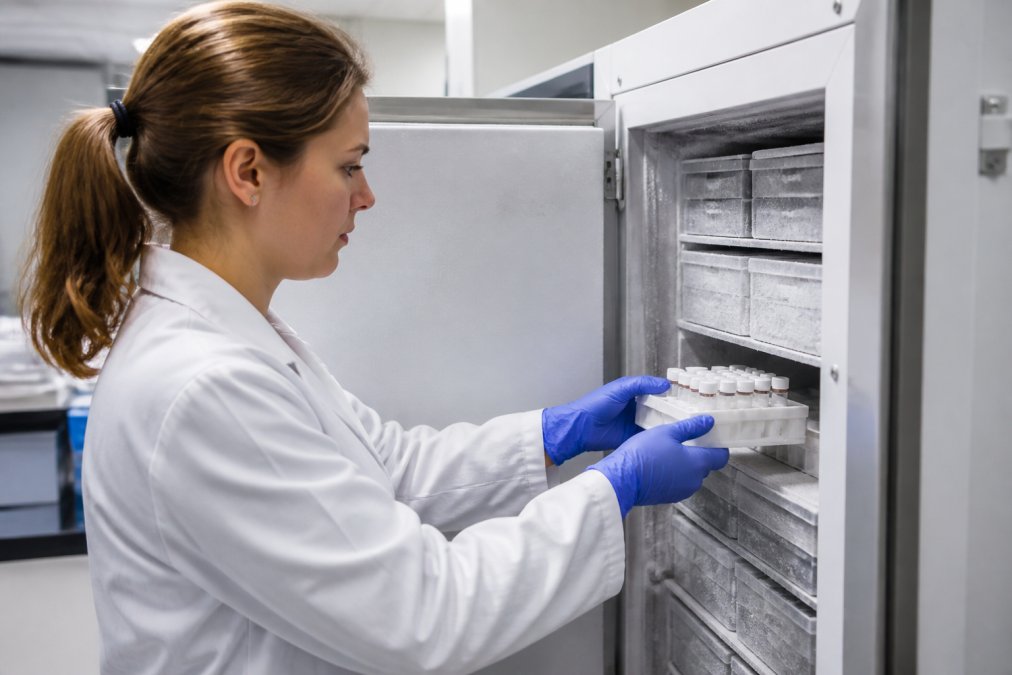
Thermal packaging protects the compound; logging proves the protection worked. Both are necessary.
Temperature-Controlled Storage Best Practices for Peptides
Lyophilized peptides are generally most stable at -20°C or below for long-term storage. Short-term holding at 2-8°C is acceptable for many compounds, though specific stability depends on the peptide’s sequence, molecular weight, and modifications.
Key storage practices for research-grade peptides:
- Store lyophilized compounds at -20°C or lower for long-term stability
- Avoid repeated freeze-thaw cycles; aliquot before initial use
- Keep vials desiccated; moisture accelerates hydrolysis even at low temperatures
- Allow vials to equilibrate to room temperature before opening to prevent condensation
- Document every storage condition change with timestamps
Opening a cold vial in a humid lab environment draws condensation into the compound, degrading the peptide faster than a moderate temperature excursion. Always cross-reference the CoA storage recommendations against your facility’s validated storage capacity before ordering.
Request explicit reconstitution and storage instructions from your supplier before your first order. A supplier providing only a CoA without handling guidance leaves a gap in your protocol documentation.
Impact of Temperature Excursions on Peptides and Compound Integrity
A temperature excursion is any deviation from the validated storage or transport temperature range. Impact depends on magnitude, duration, the compound’s thermal sensitivity, and whether the excursion occurred during storage or transit.
Short excursions at modestly elevated temperatures cause partial degradation that isn’t immediately visible. The compound may dissolve normally and pass visual inspection, but analytical testing reveals the problem: reduced purity, altered mass spectrometry profiles, or degradation products that interfere with assay results. Prolonged or severe excursions cause obvious failures: discoloration, aggregation, or complete loss of biological activity.
A compromised shipment wastes not just the compound’s cost but the labor, consumables, and time invested in the experiment relying on it. According to the WHO technical report on temperature-sensitive pharmaceutical products, temperature excursions during distribution are among the leading causes of pharmaceutical product failure globally.
Never assume a visually intact vial is analytically intact after a suspected temperature excursion. Run HPLC verification before using compromised stock in any critical protocol.
Cold Chain Monitoring Technologies That Protect Supply Chain Integrity
Cold chain monitoring has advanced significantly, and the gap between suppliers using current technology and those who don’t directly affects research outcomes.
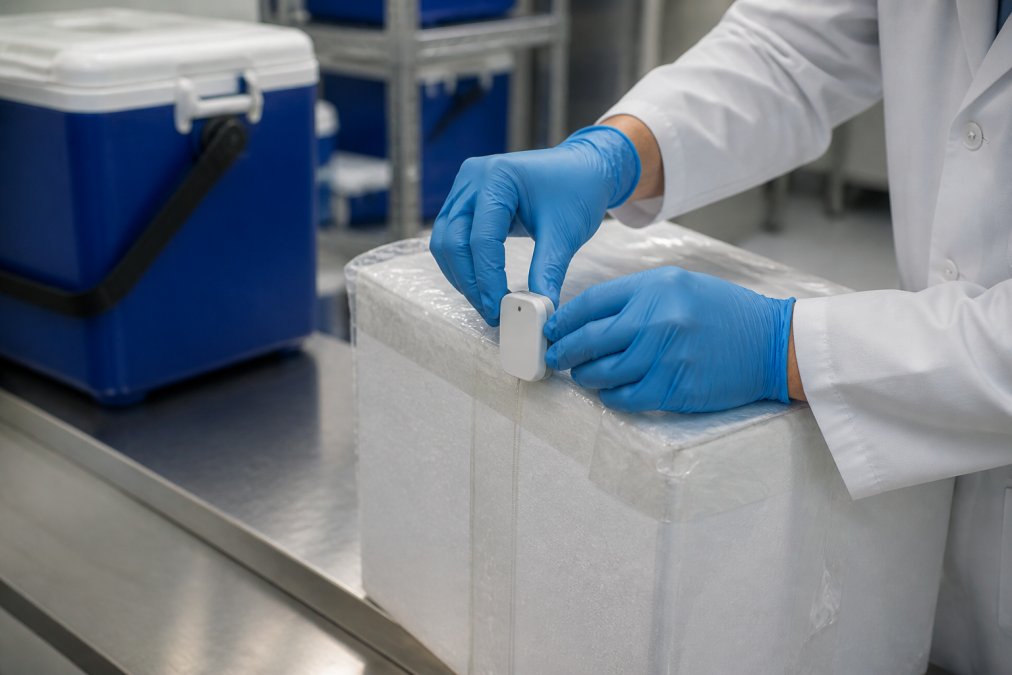
Data loggers record temperature at set intervals throughout transit, providing post-delivery verification. IoT-enabled real-time monitoring transmits temperature data continuously, enabling alerts when excursions occur. Cold chain automation in storage facilities uses integrated sensor networks and automated alarm systems to maintain validated conditions without manual checks.
| Technology | Function | Best For |
|---|---|---|
| Single-use data logger | Records temperature log for post-delivery review | Standard shipment verification |
| IoT real-time sensor | Transmits live temperature data during transit | High-value or time-sensitive shipments |
| Automated storage monitoring | Continuous facility-level temperature control and logging | Long-term compound storage |
| Cold chain management software | Aggregates data, flags deviations, generates compliance reports | Multi-shipment traceability and audit trails |
The data is only useful if someone reviews it. Building a simple review step into your receiving protocol, where a team member checks the log against the acceptable range before compounds enter inventory, catches excursions before compromised stock enters active use.
Sustainability, Cybersecurity, and Last-Mile Cold Chain Challenges
Three emerging challenges deserve attention from research procurement teams.
Carbon Footprint and Sustainable Thermal Packaging
Refrigerated transport and cold storage are energy-intensive. Sustainable thermal packaging using phase-change materials from renewable sources, recyclable insulated shippers, and optimized geometries reduces impact without compromising protection. For research labs with sustainability commitments, asking suppliers about packaging materials is a reasonable procurement criterion.
Cybersecurity Risks in IoT-Driven Cold Chain Systems
IoT-enabled monitoring systems create network-connected infrastructure throughout the supply chain. Temperature sensors, data loggers, and management platforms represent potential attack surfaces. A compromised system could falsify temperature records or mask real excursions. Research teams using IoT monitoring should ask: Are systems on isolated networks? How is data authenticated? Are logs tamper-evident?
Last-Mile Delivery: Where Cold Chains Most Often Fail
Last-mile delivery is where cold chain failures concentrate. Primary cold chain infrastructure is well-developed for major distribution nodes, but the handoff to final-mile carriers often lacks refrigerated vehicles or specialized handling protocols.
Practical mitigation strategies:
- Specify delivery windows that avoid weekend or holiday holds at carrier facilities
- Request shipments packed for a transit time longer than expected delivery
- Establish a receiving protocol that logs arrival time and initiates temperature log review immediately
- Confirm packaging is validated for worst-case ambient conditions in your region
The CDC guidelines on cold chain management for temperature-sensitive products emphasize that last-mile handling procedures are as critical as primary transport, and receiving facilities share responsibility for maintaining cold chain integrity.
Cold chain integrity isn’t solely the supplier’s responsibility. Research teams that build rigorous receiving and storage protocols protect compound quality at the point where most failures occur.
Maintaining compound integrity across the full supply chain is one of the most technically demanding aspects of research procurement. FROPeptides addresses this through temperature-controlled storage, secure packaging designed to maintain compound stability in transit, and batch-level traceability documenting every stage from sourcing to dispatch. Every order ships with a Certificate of Analysis backed by multi-stage HPLC and mass spectrometry verification. Shop Now at FROPeptides and receive research-grade compounds with the cold chain documentation your protocols require.
=== FAQ ANSWERS (audit these too, same rules) ===
[1] Q: What does cold chain logistics mean for research-grade peptides?
A: Cold chain logistics refers to the unbroken sequence of temperature-controlled storage, handling, and transportation that keeps temperature-sensitive compounds stable from production to the end user. For research-grade peptides, this means maintaining verified low-temperature conditions at every stage, cold storage, packaging, transit, and last-mile delivery, to preserve purity, prevent degradation, and ensure the compound performs as expected in molecular assays and laboratory protocols.
[2] Q: What are the risks of temperature excursions in peptide storage?
A: Even brief temperature excursions above a peptide’s specified storage range can trigger hydrolysis, oxidation, or aggregation, reducing purity below the threshold needed for reliable results. In sensitive assays where a 2% purity variance can invalidate data, a single excursion during transit or storage may compromise an entire batch. Batch-level Certificates of Analysis and real-time monitoring data logging are the primary tools for detecting and documenting these events before a compromised vial reaches the bench.
[3] Q: What are the four stages of the cold chain?
A: The four core stages are: (1) cold storage at the point of manufacture or distribution, where compounds are held at verified temperatures; (2) refrigerated transport between facilities using insulated containers or refrigerated vehicles; (3) last-mile delivery to the end recipient; and (4) end-user storage in the receiving laboratory. Each stage requires documented temperature control and, for regulated or research-grade materials, end-to-end traceability to confirm supply chain integrity throughout.
[4] Q: How does cold chain logistics ensure batch-level traceability for pharmaceutical research?
A: Batch-level traceability links every vial to its specific production lot, HPLC purity data, mass spectrometry results, and temperature history from manufacture through delivery. Suppliers provide a Certificate of Analysis for each batch, and IoT-enabled data loggers record temperature readings throughout transit. This documentation chain satisfies Good Distribution Practice (GDP) requirements and gives Principal Investigators and Lead Scientists the audit trail needed to validate results in peer-reviewed research or regulatory submissions.
Frequently Asked Questions
What does cold chain logistics mean for research-grade peptides?
Cold chain logistics refers to the unbroken sequence of temperature-controlled storage, handling, and transportation that keeps temperature-sensitive compounds stable from production to the end user. For research-grade peptides, this means maintaining verified low-temperature conditions at every stage, cold storage, packaging, transit, and last-mile delivery, to preserve purity, prevent degradation, and ensure the compound performs as expected in molecular assays and laboratory protocols.
What are the risks of temperature excursions in peptide storage?
Even brief temperature excursions above a peptide’s specified storage range can trigger hydrolysis, oxidation, or aggregation, reducing purity below the threshold needed for reliable results. In sensitive assays where a 2% purity variance can invalidate data, a single excursion during transit or storage may compromise an entire batch. Batch-level Certificates of Analysis and real-time monitoring data logging are the primary tools for detecting and documenting these events before a compromised vial reaches the bench.
What are the four stages of the cold chain?
The four core stages are: (1) cold storage at the point of manufacture or distribution, where compounds are held at verified temperatures; (2) refrigerated transport between facilities using insulated containers or refrigerated vehicles; (3) last-mile delivery to the end recipient; and (4) end-user storage in the receiving laboratory. Each stage requires documented temperature control and, for regulated or research-grade materials, end-to-end traceability to confirm supply chain integrity throughout.
How does cold chain logistics ensure batch-level traceability for pharmaceutical research?
Batch-level traceability links every vial to its specific production lot, HPLC purity data, mass spectrometry results, and temperature history from manufacture through delivery. Suppliers provide a Certificate of Analysis for each batch, and IoT-enabled data loggers record temperature readings throughout transit. This documentation chain satisfies Good Distribution Practice (GDP) requirements and gives Principal Investigators and Lead Scientists the audit trail needed to validate results in peer-reviewed research or regulatory submissions.