Best PSPeptides Alternative Suppliers in 2026
Table of Contents
- Why Research Labs Switch from PSPeptides to Alternative Suppliers
- How to Verify Peptide Purity via Certificate of Analysis
- Top PSPeptides Alternatives: Comparison Overview
- FROPeptides: Batch Traceability and Research-Grade Quality
- AminoVault: Third-Party Accreditation and GMP Certification
- Peptide Sciences: Premium Quality with Fast Domestic Shipping
- Creative Peptides: Custom Synthesis and Advanced Modifications
- GenScript: Rapid Turnaround with Guaranteed Quantity
- Bachem Americas: Large-Scale cGMP Manufacturing
- AAPPTec: Flexible Purity Levels and Multi-Scale Production
- Sigma-Aldrich: Comprehensive Catalog and Technical Depth
- HPLC and Mass Spectrometry Testing for Peptides
- Peptide Sourcing Best Practices for Research Labs
- Batch Consistency, Temperature Control, and Supply Chain Integrity
- Choosing the Right Supplier for Your Research Needs
- Frequently Asked Questions
Last Updated: September 1, 2026
Why Research Labs Switch from PSPeptides to Alternative Suppliers
Research labs abandon their current peptide suppliers for one reason: inconsistency. A batch arrives that doesn’t meet your purity specifications. Your analytical results drift. You reach out for support and wait days for a response. By then, your experiment has stalled.
The best pspeptides alternative suppliers solve this problem by building their entire operation around one principle: transparency at every stage. When you switch suppliers, you’re buying predictability and documented proof that what arrives in your lab is exactly what you ordered.
FROPeptides exemplifies this approach. Every batch ships with a Certificate of Analysis showing HPLC and mass spectrometry data. Temperature-controlled storage prevents degradation. Batch-level traceability means you can trace your compound back to its source. No backorders. No excuses.
The peptide supplier landscape has matured significantly. Competitors like AminoVault, Peptide Sciences, and GenScript have each carved out distinct advantages. Some excel at custom synthesis. Others prioritize speed. A few specialize in large-scale cGMP manufacturing.
The question isn’t whether alternatives exist, they do. The question is which one matches your lab’s actual requirements. That depends on three variables: your purity demands, your timeline, and your budget.
How to Verify Peptide Purity via Certificate of Analysis
ACertificate of Analysis (CoA) is a document that certifies the chemical composition and purity of a peptide batch. It’s your proof that the compound meets stated specifications. Without it, you’re buying blind.
The best pspeptides alternative suppliers provide complete CoAs with every order: HPLC traces, mass spectrometry data, and batch-specific testing results, not generic “typical values.”

Here’s what to look for in a CoA:
Batch-Specific Data. The CoA should reference your exact batch number, not a product lot number. This traces YOUR peptides back to the synthesis run that produced them. Generic CoAs that say “typical purity >99%” tell you nothing about what you actually received.
HPLC Results. High-performance liquid chromatography separates peptide components and measures purity by peak area (peer-reviewed research). A legitimate CoA shows the actual chromatogram with identified peaks. Purity percentages like 99.2% come from HPLC integration.
Mass Spectrometry Confirmation. Mass spec confirms molecular weight and identifies the peptide’s exact structure (peer-reviewed research). The CoA should list the observed mass and theoretical mass. If they match within acceptable tolerance (typically ±0.1%), the peptide is what the supplier claims.
Endotoxin and Sterility Testing. For research involving biological systems, endotoxin levels matter. The CoA should specify endotoxin content in EU/mg or ng/mL. Sterility testing confirms the batch isn’t contaminated.
Water Content and Residual Solvents. Lyophilized peptides retain moisture (the FDA). The CoA should state water content (typically 1-5%). Residual solvents from synthesis should be below acceptable limits.
When evaluating pspeptides alternative suppliers, request the CoA BEFORE purchasing. A supplier that hesitates or provides only “typical” data signals that batch-level quality control isn’t their priority.
Top PSPeptides Alternatives: Comparison Overview
The peptide supplier market includes established players and specialized vendors. Each brings different strengths. Use this comparison to narrow your options:
| Supplier | Third-Party Testing | Purity Verification | Turnaround | Best For |
|---|---|---|---|---|
| FROPeptides | HPLC + Mass Spec | 99%+ verified | 5-10 days | Consistency and batch traceability |
| AminoVault | ISO/IEC 17025 accredited | 99%+ CoA | 10-15 days | Rigorous scientific protocols |
| Peptide Sciences | In-house HPLC | 99%+ documented | 7-14 days | Domestic shipping and reliability |
| Creative Peptides | GMP-compliant | Custom modifications | 15-30 days | Complex synthesis and modifications |
| GenScript | Proprietary PepPower™ | Guaranteed quantity | 5 days | Fast turnaround and modifications |
| AAPPTec | Flexible purity levels | Multiple grades | 10-20 days | Custom scales and budget options |
| Bachem Americas | cGMP certified | Therapeutic-grade | 20-60 days | Large-scale manufacturing |
| Sigma-Aldrich | In-house testing | Broad catalog | 7-14 days | Reagents and technical depth |
FROPeptides: Batch Traceability and Research-Grade Quality
FROPeptides leads in batch-level transparency. Every vial ships with documented HPLC and mass spectrometry data. Every batch is traced from sourcing through packaging. Temperature-controlled storage prevents degradation before your peptides leave the facility.
This approach matters because research depends on consistency. If your peptide purity varies by 1-2% between batches, your analytical results become noise. FROPeptides eliminates that variable. You get 99%+ purity verified by independent testing, batch after batch.
Orders ship with flat-rate shipping. Free delivery on orders over $200 reduces costs for higher-volume research programs. For labs conducting sensitive molecular assays where 2% purity variance tanks your results, FROPeptides is the best pspeptides alternative.
AminoVault: Third-Party Accreditation and GMP Certification
AminoVault differentiates itself through ISO/IEC 17025-accredited third-party testing. This means an independent laboratory, not AminoVault itself, verifies purity. That independence adds credibility, especially for publications where peer reviewers scrutinize your methods.
Every peptide ships with a complete CoA showing HPLC and mass spectrometry traces. GMP certification ensures manufacturing follows strict quality protocols. The company is U.S.-based, so sourcing and documentation are transparent.
If your research will be published or submitted for regulatory approval, the third-party testing provides defensibility. The trade-off: pricing isn’t public and turnaround is typically 10-15 days.
Peptide Sciences: Premium Quality with Fast Domestic Shipping
Peptide Sciences has built a reputation for consistency and professional packaging. Turnaround is fast, typically 7-14 days with domestic U.S. shipping. The company maintains popular SKUs in stock, so common peptides ship quickly. Pricing is transparent and per-peptide, making budgeting straightforward.
For labs that prioritize reliability over cost, Peptide Sciences delivers. Customer support can be slow to respond, and pricing runs higher than some competitors.
Creative Peptides: Custom Synthesis and Advanced Modifications
Creative Peptides excels at complexity. Need phosphorylation? Biotinylation? Cyclization? Conjugation to a carrier protein? Creative Peptides handles advanced modifications that off-the-shelf suppliers can’t touch.
The company offers GMP-compliant manufacturing, so your peptides can support regulatory submissions. Turnaround is 15-30 days, reflecting the custom work involved. Best for researchers with complex peptide requirements.
GenScript: Rapid Turnaround with Guaranteed Quantity
GenScript’s proprietary PepPower™ microwave-assisted synthesis platform is fast. Turnaround can be as quick as 5 days for standard peptides. The company guarantees quantity, meaning if you order 50 mg, you get 50 mg. Over 300 modifications are available, including phosphorylation, biotinylation, and cyclization.
For straightforward peptides on tight timelines, GenScript is excellent. The guaranteed turnaround doesn’t include shipping time, and the fastest service is limited to non-complex sequences.
Bachem Americas: Large-Scale cGMP Manufacturing
Bachem manufactures peptides at cGMP standards, meaning your peptides can support FDA submissions and clinical trials. Facilities are FDA and EMEA inspected. The company has 50+ years of industry experience and offers process development from milligrams to hundreds of kilograms.
Turnaround is 20-60 days. You’re getting a manufacturing partner, not a quick research batch. Best for pharmaceutical companies and large biotech firms scaling toward clinical trials.
AAPPTec: Flexible Purity Levels and Multi-Scale Production
AAPPTec offers unusual flexibility: you choose your purity level. Immunological Grade, >80%, >90%, >95%, each has different pricing. This lets you match cost to your actual requirements. Custom synthesis ranges from 2 to 120 amino acids. Scales go from milligrams to multi-kilograms.
Turnaround is typically 10-20 days. Pricing is competitive, especially if you’re willing to accept lower purity grades. Custom peptides can’t be returned, so you’re committed once you order.
Sigma-Aldrich: Comprehensive Catalog and Technical Depth
Sigma-Aldrich offers breadth. The catalog includes natural and unnatural amino acids, resins, coupling reagents, and ready-made peptides. Custom synthesis goes up to 200 amino acids. Sigma publishes detailed guides on peptide synthesis, stability, and handling.
Pricing is higher than specialized competitors. For established labs with strong relationships to Sigma, it’s reliable. For new researchers, specialized suppliers often deliver better value.
HPLC and Mass Spectrometry Testing for Peptides
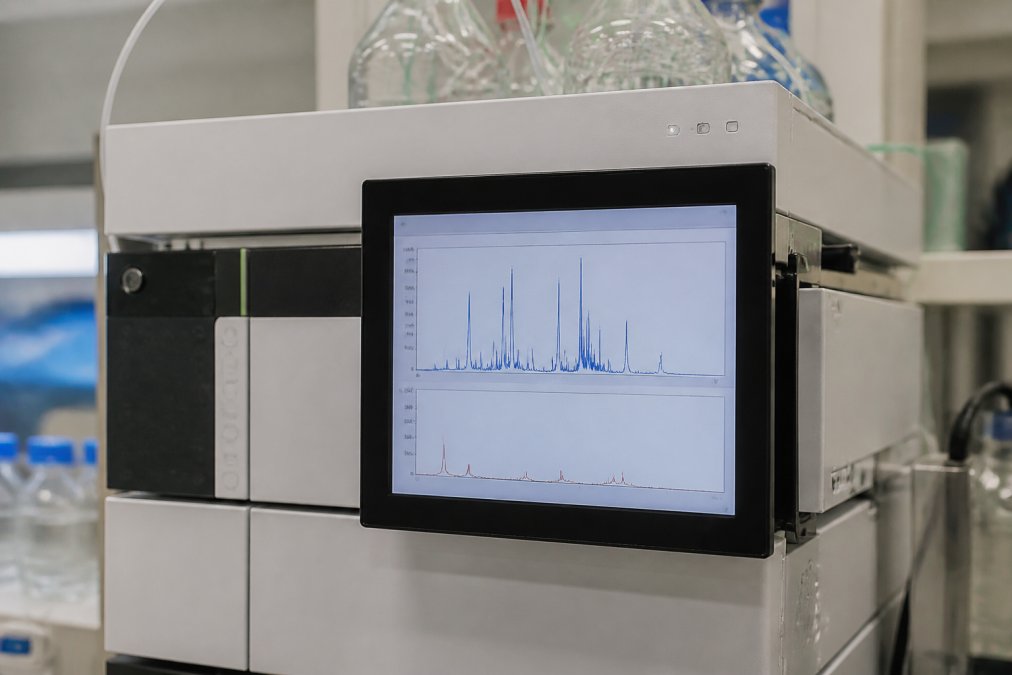
High-performance liquid chromatography (HPLC) is the gold standard for measuring peptide purity. It separates peptide components by size and charge, then quantifies each peak. The main peak (your peptide) should dominate the chromatogram.
Mass spectrometry (MS) confirms molecular weight and structure. If the observed mass matches the theoretical mass, you have the right peptide. MS also identifies structural variants and degradation products.
Together, HPLC and MS provide definitive proof of identity and purity. The best pspeptides alternative suppliers include both in their CoAs.
HPLC Purity Percentage is calculated from peak area integration. Anything above 95% is research-grade. Above 99% is premium. Retention Time is characteristic for each peptide; if your batch’s retention time matches the reference standard, it’s the right peptide. Mass Accuracy is typically ±0.1% for peptides under 3 kDa. If observed and theoretical match, the structure is correct.
When comparing pspeptides alternative suppliers, ask for actual HPLC chromatograms and MS data, not just summary percentages.
Peptide Sourcing Best Practices for Research Labs
Define Your Purity Requirements First. Not all research needs 99% purity. Cell-based assays may tolerate 95%. Structural studies require 99%+. Specify your actual requirement, then find suppliers that meet it.
Request CoAs Before Ordering. Never assume batch quality. Request the Certificate of Analysis for the specific batch you’re about to purchase. Review the HPLC trace and MS data.
Verify Third-Party Testing. Independent laboratory testing adds credibility. If your research will be published, third-party verification strengthens your methods section.
Check Stability and Storage Protocols. Ask suppliers how they store peptides before shipping. Temperature-controlled storage prevents degradation.
Evaluate Shipping and Cold Chain. Ask about cold chain logistics. Do they use insulated packaging? How long is typical transit time? These details matter for research integrity.
Test a Small Batch First. Before committing to large orders, order a small batch and test it. Verify purity matches the CoA. Then scale up if satisfied.
Track Batch-to-Batch Consistency. Order the same peptide multiple times and compare CoAs. Do purity levels stay consistent? Batch consistency predicts future reliability.
Batch Consistency, Temperature Control, and Supply Chain Integrity
Batch consistency separates reliable suppliers from unreliable ones. If your peptide purity varies by 2-3% between orders, your experimental results become noise.
The best pspeptides alternative suppliers maintain tight process controls. FROPeptides achieves this through documented standard operating procedures, multi-stage HPLC testing, and temperature-controlled storage. Every batch is tested independently. Data is recorded. Deviations trigger investigation.
Temperature control is critical. Peptides are sensitive to heat. Lyophilized peptides stored above 25°C degrade faster. During shipping, uncontrolled temperatures can degrade peptides before they arrive. FROPeptides uses temperature-controlled storage and insulated packaging with cold packs.
Supply chain integrity means traceability. You should be able to trace your peptide back to its source material, through synthesis, testing, packaging, and shipping. FROPeptides documents this entire chain. Batch numbers link to synthesis dates, testing results, and storage conditions.
Choosing the Right Supplier for Your Research Needs
Your choice depends on three factors: purity requirements, timeline, and budget.
High Purity + Tight Timeline + Premium Budget: Choose FROPeptides or Peptide Sciences. Both deliver 99%+ purity with fast turnaround (5-14 days).
High Purity + Regulatory Credibility + Budget Flexible: Choose AminoVault. The ISO/IEC 17025-accredited third-party testing adds defensibility for publications and regulatory submissions.
Custom Synthesis + Complex Modifications + Timeline Flexible: Choose Creative Peptides or GenScript. Both offer 300+ modifications.
Large-Scale Manufacturing + Regulatory Support + Enterprise Budget: Choose Bachem Americas. They’re equipped for cGMP manufacturing at scale.
Budget Constrained + Flexible Purity + Custom Scales: Choose AAPPTec. They let you choose purity levels, reducing cost for research that doesn’t need 99%.
Broad Catalog + Technical Resources + Established Relationships: Choose Sigma-Aldrich. Their catalog is comprehensive and technical documentation is thorough.
Switching from PSPeptides to an alternative supplier requires confidence that you’re not sacrificing quality. FROPeptides, AminoVault, Peptide Sciences, Creative Peptides, GenScript, AAPPTec, Bachem, and Sigma-Aldrich represent the best pspeptides alternative suppliers available. FROPeptides leads in batch traceability and consistency, delivering 99%+ purity verified by HPLC and mass spectrometry with temperature-controlled handling and no backorders. Get started with FROPeptides and experience research-grade peptides with complete transparency, batch-level documentation, and the reliability your lab demands.
Frequently Asked Questions
Q: What makes a PSPeptides alternative supplier reliable for research-grade peptides?
A: A reliable alternative supplier must provide third-party testing verification, transparent Certificates of Analysis with HPLC and mass spectrometry data, batch-level traceability from sourcing to packaging, and temperature-controlled storage and shipping. Look for suppliers with ISO/IEC 17025 accreditation or GMP certification. Batch consistency across orders, fast shipping with proper cold chain logistics, and responsive customer support for technical questions are equally critical for reproducible research results.
Q: Why is a Certificate of Analysis critical when sourcing peptides?
A: A Certificate of Analysis (CoA) documents the actual purity, identity, and potency of each batch through analytical testing methods like HPLC and mass spectrometry. It provides proof that the peptide meets stated specifications before it reaches your lab. Without a CoA, you cannot verify whether the compound is truly research-grade or detect contamination. For peer-reviewed research, a CoA is often required to validate that your results are reproducible and based on verified materials.
Q: How do I verify the purity of research-grade peptides before using them in molecular analysis?
A: Request the Certificate of Analysis for the specific batch you receive. Review the HPLC chromatogram to confirm purity percentage and identify any unknown peaks that might indicate impurities. Check the mass spectrometry data to verify the peptide’s molecular weight matches the expected structure. Compare batch-to-batch results if you have historical data from previous orders. If purity falls below your protocol’s threshold, contact the supplier immediately to request a replacement or refund before the compound is used in your assay.
Q: What is the difference between HPLC and mass spectrometry testing for peptides?
A: High-performance liquid chromatography (HPLC) separates peptide components by chemical properties and measures purity as a percentage by detecting what fraction of the sample is the desired peptide versus impurities. Mass spectrometry confirms the exact molecular weight of the peptide, verifying its chemical identity and detecting structural modifications or degradation. Together, these methods provide both purity quantification and identity confirmation, which is why research-grade suppliers use both to validate every batch.
Q: Do alternative suppliers offer volume discounts for research labs ordering 50+ vials per month?
A: Many alternative suppliers offer tiered pricing for higher volumes, but discount structures vary. AminoVault, GenScript, AAPPTec, and Bachem Americas typically provide custom quotes based on order volume, frequency, and scale. FROPeptides offers improved cost efficiency for higher-volume orders and free shipping on orders over $200. Contact suppliers directly with your monthly volume and project timeline to request a formal quote and discuss volume-based pricing.