Research Peptides for Sale: Quality, Testing, and Supplier Evaluation
Last Updated: October 24, 2026
Quick Summary
Research peptides for sale are laboratory compounds explicitly intended for scientific analysis, not human use, sourced from vendors who provide batch-level testing documentation and verified purity through HPLC and mass spectrometry. Quality separates reliable suppliers from those cutting corners on testing rigor, documentation transparency, and cold chain logistics.
- HPLC combined with mass spectrometry is the gold standard for peptide purity testing, revealing both purity percentage and contaminant identity.
- A complete Certificate of Analysis must include lot number, compound name, molecular weight, purity percentage with method, testing date, and testing laboratory name.
- Store lyophilized peptides at -20°C in dark, dry conditions; minimize freeze-thaw cycles and use desiccated containers to prevent moisture absorption and degradation.
- Verify vendor credibility by requesting lot-level COAs before ordering, then running independent analysis on your first test batch to confirm quality.
- Research-grade peptides cost less than pharmaceutical-grade because they skip FDA approval and GMP manufacturing controls required for human use compounds.
Table of Contents
- What to Expect When Buying Research Peptides for Sale
- Research Peptide Suppliers: Evaluating Vendor Credibility and Track Record
- Peptide Purity Testing: Methods, Standards, and What the Data Tells You
- Research Peptide Certificates of Analysis: Reading and Validating COA Documentation
- Peptide Storage and Handling: Maintaining Compound Integrity from Receipt to Analysis
- Pricing, Availability, and Product Specifications Across Catalogs
- Research Use vs. Human Use: Legal and Practical Distinctions
- Placing Your First Order: Batch Verification and Quality Assurance Steps
- Frequently Asked Questions
What to Expect When Buying Research Peptides for Sale
Sourcing research peptides for sale directly impacts your lab’s data quality and reproducibility. Dozens of suppliers exist, but they’re not equivalent. What separates a reliable vendor comes down to three things: testing rigor, documentation transparency, and batch-to-batch consistency.
At FROPeptides, we understand that buying research peptides for sale means committing to compounds that perform under scrutiny. Your publications and funding depend on it. Every vial must meet exacting purity standards before it leaves our facility.
A peptide arriving at 94% purity instead of the promised 98% means wasted reagent, invalidated assays, repeated experiments, and lost weeks. Vendors worth your time don’t just claim high purity, they prove it, batch by batch, with verifiable third-party testing.
This guide covers what matters when evaluating suppliers of research peptides for sale: reading a Certificate of Analysis, what testing methods reveal about quality, and spotting vendors cutting corners on cold chain logistics or documentation.
Research Peptide Suppliers: Evaluating Vendor Credibility and Track Record
Not every supplier claiming to sell research peptides for sale has the infrastructure to back it up. Credibility comes down to investment in testing equipment and transparency about what that testing shows.
If a supplier can’t provide lot-level documentation, move on.
They position products explicitly for scientific research, showing they understand the research-use distinction. The research-use positioning is what matters.
Specificity matters, vague “high purity” promises mean nothing, while concrete numbers like 99%+ give you something to verify against your own analytical results.
This breadth suggests they serve multiple research verticals, a strength if your work spans different peptide types.
When evaluating any vendor of research peptides for sale, ask three questions: Can they provide a COA for every lot? Do they name their testing partner? Will they replace a batch if your analysis shows it doesn’t meet spec? Compare top research-grade peptide suppliers offering HPLC testing, mass spectrometry verification, and batch-level certificates of analysis for your lab. A vendor that hesitates on any of these is not worth your time.
FDA guidance on research use compounds
Peptide Purity Testing: Methods, Standards, and What the Data Tells You
Purity is the most critical specification for any research peptide, but it’s a composite measure, it depends on the method used, and different methods catch different impurities.
The gold standard is high-performance liquid chromatography (HPLC) combined with mass spectrometry. HPLC separates peptide components by chemical properties; mass spectrometry confirms the compound’s exact molecular weight and identity. Together they reveal not just purity but what the contaminants actually are.
A vendor that only reports HPLC purity without mass spec confirmation is giving you half the picture.
Suppliers advertising purity percentages without specifying the method or testing partner are a red flag. A legitimate vendor names the contract laboratory, states the method, and provides chromatograms or a detailed analysis report.
Multi-stage testing, HPLC at receipt, HPLC again after lyophilization, mass spec confirmation, separates vendors serious about quality from those meeting minimum standards.
Different testing methods reveal different levels of detail about peptide quality and contamination.
| Testing Method | What It Does | Limitation |
|---|---|---|
| HPLC alone | Separates peptide components by chemical properties | May show single peak without identifying closely related impurities |
| HPLC + Mass Spectrometry | Confirms exact molecular weight and identifies contaminants | Gold standard; reveals what impurities actually are |
| Multi-stage testing | HPLC at receipt, after lyophilization, mass spec confirmation | Separates serious vendors from those meeting minimum standards |
Research Peptide Certificates of Analysis: Reading and Validating COA Documentation
A Certificate of Analysis is your proof of purchase and legal documentation if results don’t match the supplier’s claims. Learning to read one properly is non-negotiable.
The lot number is critical. Many vendors provide a single COA for an entire production run, so every vial carries the same documentation.
When you receive a COA, cross-check the lot number against your shipment label. Access the COA Library to review batch-specific Certificates of Analysis for research compounds with lot numbers, HPLC purity, and identity testing.
Mass spectrometry data should show a single peak matching your target peptide’s molecular weight. If multiple peaks appear without explanation, ask the vendor what they represent. A legitimate vendor will answer; one that deflects is being evasive.
We recommend you request certificates of analysis from suppliers before committing to a large order. Most reputable vendors will provide sample COAs for their standard products so you can evaluate their testing rigor.
USP standards for peptide purity testing
Peptide Storage and Handling: Maintaining Compound Integrity from Receipt to Analysis
A peptide that arrives in perfect condition can degrade rapidly without controlled storage. Temperature, humidity, light exposure, and oxygen all accelerate degradation.
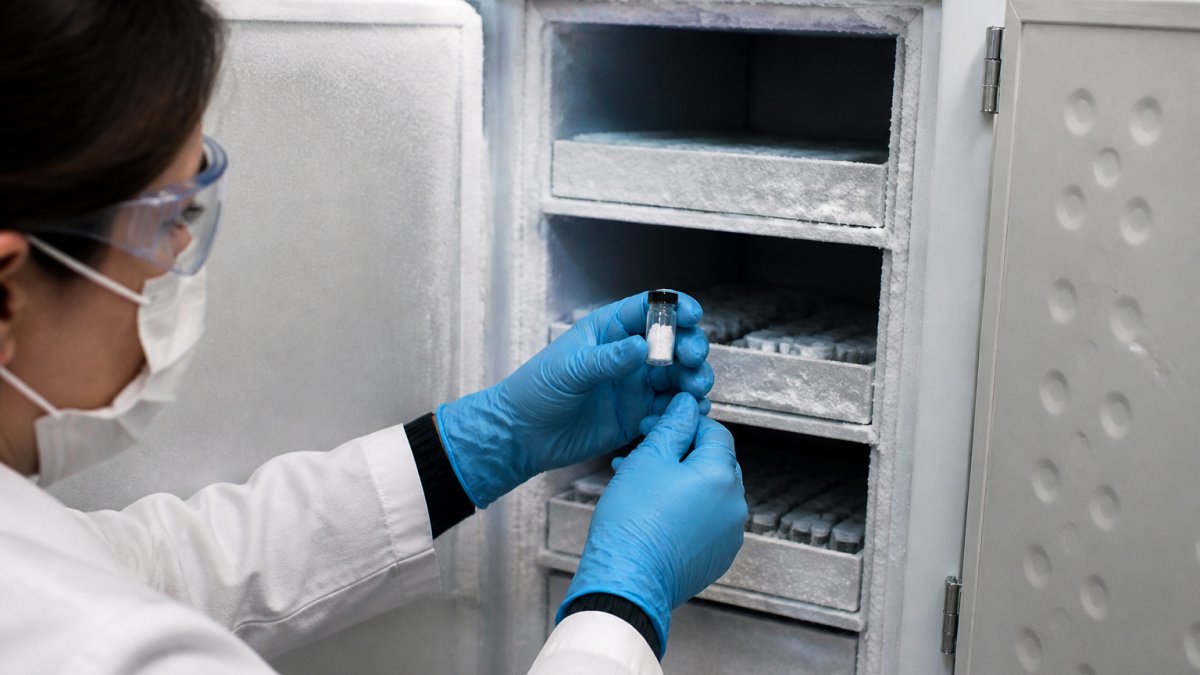
Lyophilized peptides are more stable than dissolved ones but not inert. Standard storage is -20°C in a dark, dry environment; some peptides benefit from -80°C for long-term storage.
Inspect packaging immediately on arrival for temperature excursion: ice crystallization on vials, condensation inside the box, or warmth. If the cold chain was broken, document with photos and contact the supplier before opening.
Minimize freeze-thaw cycles, each thaw causes degradation. Prepare aliquots in smaller vials so you use one at a time without repeatedly thawing the main stock.
Humidity is often overlooked but critical. Peptides absorb moisture, which accelerates hydrolysis. Store in a desiccated environment, ideally in a freezer with a desiccant cartridge.
Learn best practices for maintaining peptide stability in your lab environment and handling protocols.
Pricing, Availability, and Product Specifications Across Catalogs
Research peptides for sale come at many price points depending on purity, quantity, and whether synthesis is custom or catalog.
Catalog peptides, pre-synthesized compounds multiple labs order, cost less because vendors amortize synthesis costs.
Custom synthesis, a peptide sequence specific to your research, costs more and takes longer.
Quantity discounts are common. Many vendors offer tiered pricing: single vials at full price, bulk orders at reduced per-unit cost. If your lab runs multiple projects using the same peptide, ordering in bulk can cut costs substantially.
Availability varies by vendor. If your research timeline is tight, check availability before committing to a supplier.
When comparing prices, factor in total cost: peptide price plus shipping plus customs or handling fees for international vendors.
Browse high-purity research peptides and current pricing for your specific research needs.
Research Use vs. Human Use: Legal and Practical Distinctions
This distinction matters legally and scientifically. Research peptides are explicitly intended for laboratory analysis, not for injection, ingestion, or any form of human consumption. Vendors that sell research-use compounds cannot make any claims about safety, efficacy, or suitability for human use.
The practical difference is regulatory. Research-use peptides aren’t subject to FDA approval for human use because they’re not marketed for human use, and they don’t require the manufacturing controls or stability testing of pharmaceutical-grade compounds, which is why they’re cheaper and faster to produce.
If you’re conducting basic research, studying peptide interactions, testing analytical methods, or validating assays, research-grade is appropriate and cost-effective. If your work eventually leads to human trials or a therapeutic product, you’ll need to source pharmaceutical-grade compounds from a vendor with appropriate FDA compliance and GMP (Good Manufacturing Practice) certification (the FDA).
When you order from a vendor, confirm they’re explicitly positioning the product as research-use only. Legitimate vendors will state this clearly on their product pages and in their terms of service. If a vendor is vague about intended use, that’s a warning sign.
Placing Your First Order: Batch Verification and Quality Assurance Steps
Before you commit to a vendor for ongoing supply, order a small test batch and run your own validation.
Start with a single vial or a small quantity. Request the COA before the order ships, not after. Legitimate vendors will provide this without hesitation.
When the shipment arrives, document the condition immediately. Photograph the packaging, the vials, and any temperature monitoring devices (some vendors include thermometers or temperature-sensitive labels).
Then run your own analysis. If you have access to HPLC or mass spec, verify the purity yourself.
Compare your results to the vendor’s COA. If they match closely (within 1-2%), the vendor is reliable. If they diverge significantly, contact the vendor immediately.
Use this first order to assess not just product quality but vendor responsiveness. How quickly did they respond to your questions?
Once you’ve verified quality with the first batch, you can scale to larger orders with confidence.
Sourcing research peptides for sale means choosing between vendors who cut corners and those who invest in quality. FROPeptides delivers research-grade materials with multi-stage HPLC testing and mass spectrometry verification on every batch, batch-level traceability through detailed Certificates of Analysis, and temperature-controlled storage and dispatch to maintain compound integrity. Shop now.
Frequently Asked Questions
How do I verify that research peptides for sale meet the purity standards I need for my assay?
Request the Certificate of Analysis (COA) for the specific lot number before purchase. The COA should document purity via HPLC (high-performance liquid chromatography) and mass spectrometry results. Look for purity percentages (typically 95% or higher for research-grade peptides) and verify that the testing was performed by a third party, not just the supplier. Cross-check the lot number on the vial against the COA to ensure batch-level traceability. If purity variance of 2% or less affects your results, confirm batch-to-batch consistency data with the supplier before committing to bulk orders.
What should I look for when evaluating research peptide suppliers?
Prioritize suppliers offering third-party testing, COAs for every lot, and explicit batch-level traceability. Verify they provide multi-stage HPLC and mass spectrometry verification, temperature-controlled shipping, and clear documentation of synthesis location and lyophilization methods. Check whether they stock the peptide categories you need (synthetic, bioactive, hormones, or custom options) and confirm their turnaround time for COA delivery. Smaller labs should confirm the supplier serves institutions of your size, not just bulk pharmaceutical buyers.
Are research peptides approved for human use, and what are the legal restrictions?
Research-grade peptides are explicitly marketed and sold for laboratory and scientific use only, not for human consumption or clinical application. The FDA does not approve research peptides for human use; they are classified as reagents for in vitro and analytical work. Selling or using research peptides for human health claims violates FDA regulations and state laws. If your research involves human subjects or clinical translation, you must work through regulated pharmaceutical development channels. Always verify that your intended use aligns with the supplier’s stated research-only positioning and your institution’s IRB and compliance requirements.
What does the Certificate of Analysis tell me about peptide quality and batch consistency?
The COA documents the purity percentage (determined by HPLC), molecular weight confirmation (mass spectrometry), lot number, synthesis date, and expiration date. It shows whether the peptide meets the supplier’s stated purity threshold (e.g., 95% or 99%+) and confirms third-party testing. Compare COAs across multiple lots from the same supplier to assess batch-to-batch consistency; high variance signals quality control issues. The COA also lists storage conditions and handling recommendations. Always cross-reference the lot number on your received vial with the COA to confirm you received the tested batch, not a substitute.
How should I store and ship research peptides to prevent degradation?
Research peptides, especially lyophilized forms, must be stored at 2-8°C (refrigerated) or -20°C (frozen) depending on supplier guidance. Protect vials from light and moisture by keeping them in original packaging. Request temperature-controlled shipping with tracking; standard ground shipping risks exposure to heat, especially in warm climates. Confirm with your supplier whether temperature control extends to your facility or only to the airport. Upon arrival, verify the vial’s integrity and condition immediately. If a shipment shows signs of thawing, leakage, or damage, document it with photos and contact the supplier within 24 hours to arrange replacement. Store unused vials in a dedicated freezer separate from biological samples to prevent cross-contamination.
