Research Grade Coenzymes for Drug Discovery: 2026 Guide
Table of Contents
- What Research Grade Coenzymes Actually Mean for Drug Discovery
- 7 Research Grade Coenzymes Essential for Drug Discovery Workflows
- High Purity NAD+ Analysis: Why Purity Grade Decides Your Results
- Lyophilized Coenzyme Stability: Storage and Handling Requirements
- HPLC Testing for Biochemicals: Validation Protocols That Matter
- Sourcing and Procurement Criteria for Pre-clinical Research
- Frequently Asked Questions
Last Updated: August 25, 2026
What Research Grade Coenzymes Actually Mean for Drug Discovery
Research grade coenzymes are non-protein biochemical catalysts that meet defined purity thresholds, batch traceability requirements, and documented validation standards for use in pre-clinical and analytical research workflows. A coenzyme sold for general laboratory use differs fundamentally from one validated for drug-target interaction studies, where even minor impurity profiles can invalidate assay results entirely.
Enzymatic reactions in drug discovery assays are exquisitely sensitive to cofactor quality. An NAD+ preparation at 92% purity introduces enough contamination to distort sirtuin activation data. A CoA batch with inconsistent molecular weight creates noise in fatty acid metabolism screens that mimics real pharmacological signals. Research grade coenzymes are defined by three criteria: purity verified by HPLC and mass spectrometry, batch-specific documentation with a Certificate of Analysis, and storage conditions that maintain compound integrity from synthesis to reconstitution.
Coenzymes participate in metabolic pathways increasingly validated as therapeutic targets, particularly in oncology, epigenetics, and immuno-oncology. As documented in NIH National Library of Medicine review on coenzyme function in disease, coenzyme-dependent enzymes regulate post-translational modifications, redox homeostasis, and substrate specificity across virtually every major disease pathway under active investigation. Selecting the wrong grade of coenzyme at the assay development stage compounds into failed screens, wasted reagent budgets, and delayed candidate validation.
Below, we cover the seven coenzymes most critical to drug discovery workflows, followed by practical guidance on purity analysis, lyophilized coenzyme stability, HPLC validation, and procurement criteria.
7 Research Grade Coenzymes Essential for Drug Discovery Workflows
Seven coenzymes appear repeatedly across drug discovery workflows because they sit at the intersection of the most therapeutically relevant metabolic pathways. Each has distinct catalytic roles, solubility profiles, and purity requirements that determine which assays they can reliably support.
| Coenzyme | Primary Role | Key Assay Applications | Minimum Purity for Drug Discovery |
|---|---|---|---|
| NAD+ | Redox cofactor, sirtuin substrate | SIRT1/2 assays, mitochondrial screens | 99%+ |
| Coenzyme A | Acyl group carrier | Fatty acid metabolism, citric acid cycle | 90%+ |
| CoQ10 | Electron transport chain | Mitochondrial function, oxidative stress | 98%+ |
| Coenzyme B12 | Mutase cofactor | Enzyme kinetics, metabolic disorder models | 95%+ |
| FAD | Oxidoreductase cofactor | Redox enzyme assays, metabolite profiling | 95%+ |
| NADP+ | Anabolic redox cofactor | Pentose phosphate pathway, CYP450 assays | 98%+ |
| CoQ2 | Electron carrier analog | Biochemical assay reagent, ETC research | Supplier-dependent |
1. NAD+ (Nicotinamide Adenine Dinucleotide)
NAD+ is the most widely used coenzyme in drug discovery, functioning as both a redox cofactor and a direct substrate for sirtuin enzymes, PARP proteins, and CD38. Its centrality to cellular energy metabolism, DNA repair signaling, and aging pathway research makes it foundational for oncology and neurodegeneration programs.
For high purity NAD+ analysis, 99%+ purity is not optional. Sirtuin activation assays are particularly sensitive: contaminating NADH or ADP-ribose fragments compete for active sites and produce false deacetylase activity readings. Batch-level traceability matters because NAD+ degrades under improper storage, and a batch that tested at 99% at synthesis may read differently six months later if cold chain was interrupted.
FROPeptides supplies NAD+ as a lyophilized powder verified at 99%+ purity by HPLC and mass spectrometry, with a batch-specific Certificate of Analysis included with every order. Pricing depends on quantity, dates, and delivery; please refer to FROPeptides’s website for current prices or a quote.
Reconstitute NAD+ in ice-cold phosphate-buffered saline immediately before use. Avoid freeze-thaw cycles after reconstitution. Aliquot into single-use volumes to preserve catalytic efficiency across experimental runs.
2. Coenzyme A (CoA)
Coenzyme A functions as an acyl group carrier across the citric acid cycle, fatty acid synthesis, and amino acid catabolism. In drug discovery, CoA-dependent acetyltransferase assays screen histone acetyltransferase inhibitors and validate epigenetic targets.
Purity thresholds for CoA vary by application. Histone acetyltransferase inhibitor screens require analytical grade material at 90%+ purity, because CoA impurities directly interfere with thioester bond formation kinetics. Confirm the CAS number matches the intended form: CoA anhydrous (CAS 85-61-0) and CoA sodium salt (CAS 55672-92-9) behave differently in aqueous assay buffers.
3. Coenzyme Q10 (Ubiquinone)
CoQ10 is a lipid-soluble component of the mitochondrial electron transport chain, shuttling electrons between Complex I/II and Complex III. Its role as a potent antioxidant makes it relevant to oxidative stress models and mitochondrial dysfunction studies linked to neurodegenerative disease.
Research-grade CoQ10 at 98%+ purity is necessary for reliable in vitro screening because the compound’s low aqueous solubility means assay buffer composition directly affects bioavailability in cell-free systems.
4. Coenzyme B12 (Adenosylcobalamin)
Adenosylcobalamin is the biologically active coenzyme form of vitamin B12, serving as an essential cofactor for mutases, eliminases, and aminomutases. In drug discovery, it appears in studies targeting genetic mutations affecting AdoCbl synthesis pathways and in enzyme kinetics research for metabolic disorder models.
At 95%+ purity, Coenzyme B12 is suitable for critical enzymatic studies where cofactor concentration directly determines reaction velocity measurements. Degraded AdoCbl generates hydroxocobalamin and cyanocobalamin as breakdown products, both of which interfere with enzyme kinetics readings at nanomolar concentrations.
Never expose Adenosylcobalamin to ambient light during weighing or reconstitution. Even brief light exposure initiates photolytic cleavage of the cobalt-carbon bond, converting the active coenzyme form to an inactive analog that will produce false-negative results in mutase activity assays.
5. FAD (Flavin Adenine Dinucleotide)
FAD is a vitamin-derived coenzyme functioning as a prosthetic group for oxidoreductase enzymes, including monoamine oxidases, succinate dehydrogenase, and NADH dehydrogenase. In drug discovery, FAD-dependent enzymes are validated therapeutic targets in oncology and neurological disease. At 95%+ purity, FAD supports reliable catalytic efficiency measurements without introducing background fluorescence that contaminates fluorometric readouts.
6. NADP+ (Nicotinamide Adenine Dinucleotide Phosphate)
NADP+ is the primary redox cofactor for anabolic metabolism, driving the pentose phosphate pathway and serving as an essential substrate for cytochrome P450 enzymes. In drug discovery, CYP450 assays are fundamental to pharmacokinetics and drug-target interaction studies because CYP enzymes mediate the majority of hepatic drug metabolism.
High purity NADP+ at 98%+ is necessary for CYP450 inhibition assays because NADPH contamination in NADP+ preparations creates background electron transfer that masks inhibitor potency readings. As noted in FDA guidance on drug metabolism and drug interaction studies, CYP450 characterization is a regulatory expectation for IND submissions, making assay-grade NADP+ a direct component of pre-clinical compliance workflows.
7. Coenzyme Q2
CoQ2 is a short-chain ubiquinone analog used primarily as a biochemical assay reagent in electron transport chain research. Its shorter isoprenoid side chain compared to CoQ10 increases aqueous solubility, making it more tractable for cell-free assay systems. Researchers use CoQ2 as a substrate analog in Complex I and Complex III activity assays.
High Purity NAD+ Analysis: Why Purity Grade Decides Your Results
High purity NAD+ analysis is the single most consequential quality decision in coenzyme-dependent drug discovery assays. A 99%+ purity grade is not a marketing specification; it is the threshold below which contaminating nucleotides, degradation products, and synthesis byproducts introduce systematic error into sirtuin, PARP, and CD38 activity measurements.
The practical difference between 95% and 99% purity in NAD+ is not linear. The 4% impurity at 95% purity typically contains NADH, ADP-ribose, nicotinamide, and adenosine monophosphate, all of which are biologically active at standard assay concentrations. NADH in particular acts as a competitive inhibitor of NAD+-dependent dehydrogenases, directly suppressing measured enzyme activity and producing dose-response curves that underestimate inhibitor potency.
Batch consistency is critical for high purity NAD+ analysis. A supplier who delivers 99% purity on one batch and 96% on the next has introduced a variable that invalidates cross-batch comparisons. For labs running longitudinal drug discovery screens, batch-to-batch variation in cofactor purity is a source of false leads that only surfaces during data review.
According to NIST guidelines on reference material purity for analytical chemistry, analytical grade biochemical reagents require documented purity profiles with defined impurity limits, not just a single purity percentage. The Certificate of Analysis should specify the analytical method used, the batch number, and the date of testing.
For NAD+-dependent assays in drug discovery, 99%+ purity verified by both HPLC and mass spectrometry is the minimum acceptable specification. A purity certificate without the analytical method cited is not a purity certificate.
Lyophilized Coenzyme Stability: Storage and Handling Requirements
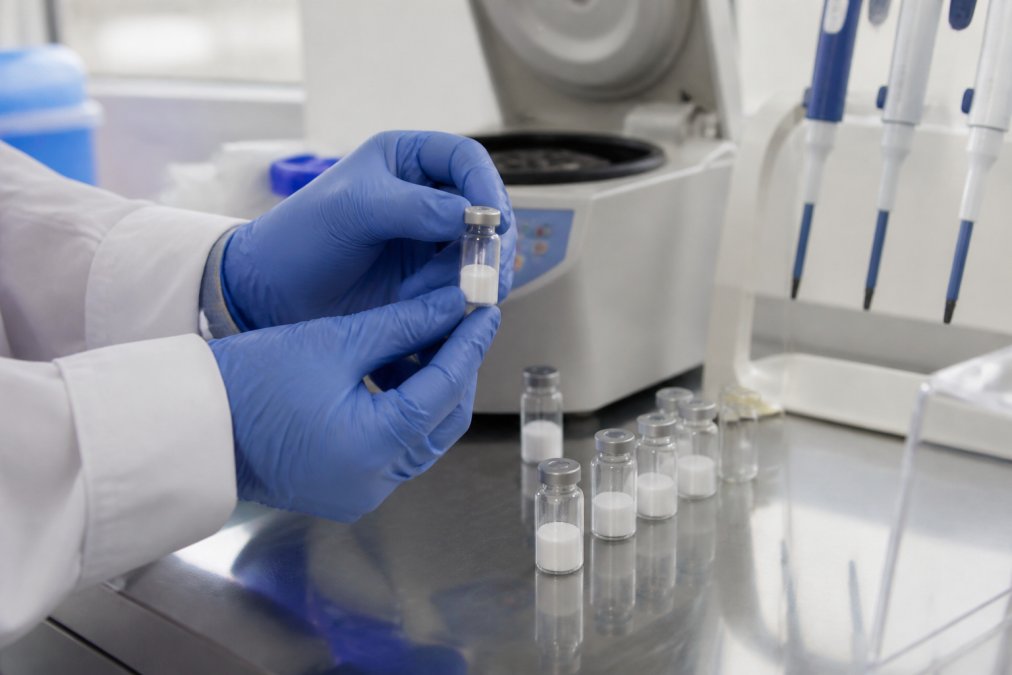
Lyophilized coenzyme stability determines the usable shelf life of your research-grade materials and directly affects the reproducibility of experiments run weeks or months apart. Lyophilization removes water under vacuum to produce a dry powder that resists chemical degradation at temperatures that would rapidly destroy the same compound in solution.
The critical variables for lyophilized coenzyme stability are temperature, humidity, and light exposure. Most lyophilized coenzymes should be stored at -20°C in sealed, desiccated containers. NAD+ and NADP+ are hygroscopic: exposure to ambient humidity during weighing initiates hydrolysis and reduces effective purity within hours. FAD and Coenzyme B12 are photosensitive and require amber vials or foil-wrapped storage to prevent photodegradation.
A common mistake is storing lyophilized coenzymes at 4°C to avoid repeated freeze-thaw cycles during active use. For most coenzymes, 4°C storage accelerates degradation relative to -20°C, particularly for vitamin-derived coenzymes like FAD and B12. The correct approach is to prepare single-use aliquots from the primary stock immediately after receipt, store aliquots at -20°C, and never return unused reconstituted solution to the primary vial.
Reconstitution solvent matters for stability testing in downstream assays. CoA sodium salt reconstituted in water degrades faster than CoA reconstituted in phosphate buffer at physiological pH. Always confirm the recommended reconstitution solvent from the batch-specific CoA documentation before preparing working solutions.
FROPeptides ships all lyophilized coenzymes under temperature-controlled conditions with secure packaging designed to maintain compound integrity through the full transit chain.
HPLC Testing for Biochemicals: Validation Protocols That Matter
HPLC testing for biochemicals is the primary analytical method for verifying coenzyme purity and detecting degradation products in research-grade materials. High-performance liquid chromatography separates compounds by their interaction with a stationary phase, producing a chromatogram where each peak corresponds to a distinct molecular species. The area under the primary peak relative to total peak area gives the purity percentage.
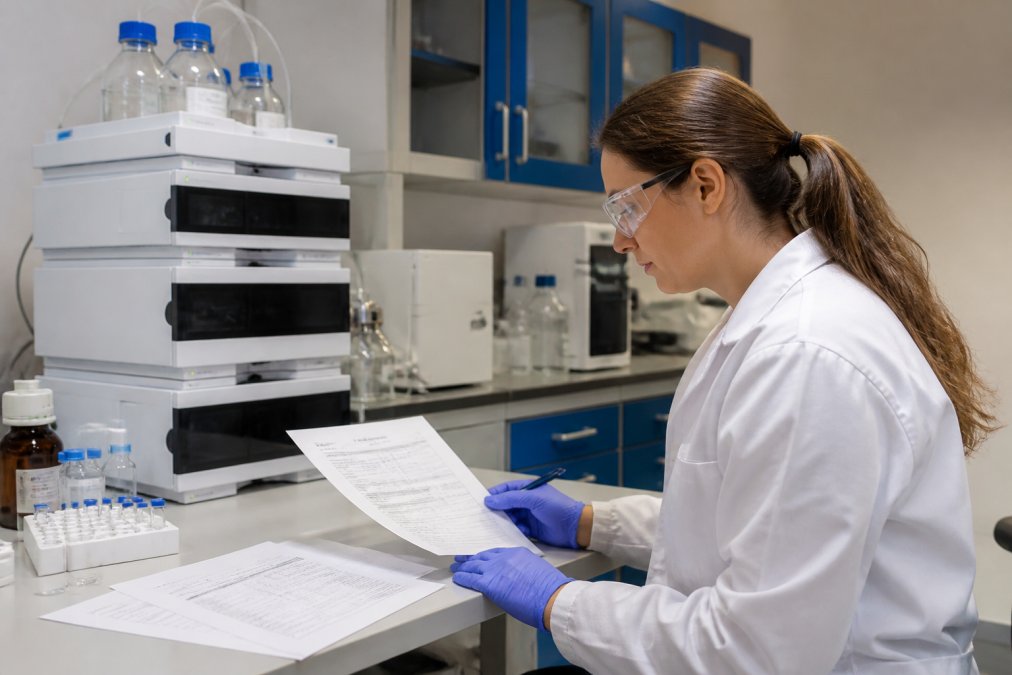
For research grade coenzymes, HPLC alone is necessary but not sufficient for full validation. Mass spectrometry confirmation is required to verify molecular identity, not just purity. A compound can produce a clean HPLC trace at 99% purity while containing a structural isomer that co-elutes with the target compound and is invisible to UV detection.
The validation protocol that matters for pre-clinical drug discovery includes:
- HPLC purity analysis with UV detection at the compound’s characteristic absorption wavelength
- Mass spectrometry confirming molecular weight within ±0.5 Da of the theoretical value
- Batch number and synthesis date documented on the Certificate of Analysis
- Chromatography method reference specifying column type, mobile phase, and gradient conditions
- Residual solvent testing for compounds synthesized using organic solvents
Reagent optimization for coenzyme-dependent assays should include a purity verification step before each new batch enters the workflow. The Certificate of Analysis provided with every FROPeptides batch includes HPLC and mass spectrometry data, batch number, and purity percentage, giving labs the documentation chain required for pre-clinical study records.
Sourcing and Procurement Criteria for Pre-clinical Research
Sourcing research grade coenzymes for drug discovery is a procurement decision with direct consequences for data integrity and regulatory standing. The non-negotiable procurement criteria for pre-clinical coenzyme sourcing are:
- Purity verification method stated explicitly, not just a percentage, but the analytical method (HPLC, mass spectrometry, NMR) used to generate it
- Batch-specific Certificate of Analysis, a generic CoA covering a product line is not batch-level documentation
- Traceability from sourcing to packaging, the supplier should provide synthesis origin and quality control records for any batch
- Temperature-controlled storage and shipping, cold chain documentation should be available on request
- Ready inventory without backorder delays, drug discovery timelines do not accommodate six-week lead times on essential cofactors
- Volume pricing for sustained programs, a 12-month drug discovery screen requires consistent supply at predictable cost
A procurement decision based on catalog price alone typically costs more in the long run. A single failed assay caused by substandard cofactor purity consumes more budget in reagent waste, instrument time, and researcher hours than the price differential between analytical grade and general laboratory grade materials.
As outlined in FDA pre-clinical research guidance on reagent quality standards, reagent quality documentation is an expected component of IND application supporting data. Sourcing from suppliers who cannot provide batch-level CoA documentation creates a gap in the traceability record that reviewers will flag.
For high-throughput screening campaigns, a primary supplier relationship with confirmed volume pricing and priority inventory access reduces both cost and supply risk. For smaller labs running 10-15 active projects, the priority is consistent purity across batches rather than volume economics.
Before committing to a new coenzyme supplier, request CoA documentation for two or three recent batches of the specific compound you need. Compare the purity percentages and HPLC chromatograms across batches. Batch-to-batch consistency in the documentation is a reliable proxy for manufacturing consistency in the product.
Selecting and validating research grade coenzymes for drug discovery is not a procurement afterthought. It is a foundational quality decision that determines whether your enzymatic assays, metabolic pathway screens, and therapeutic target validation studies produce data you can trust. FROPeptides provides lyophilized coenzymes verified at 99%+ purity by multi-stage HPLC testing and mass spectrometry, with batch-level Certificates of Analysis, temperature-controlled shipping, and ready inventory for labs that cannot afford supply disruptions. Get started with FROPeptides and establish the reagent quality baseline your drug discovery program requires.
=== FAQ ANSWERS (audit these too, same rules) ===
[1] Q: What defines research-grade coenzymes compared to food-grade?
A: Research-grade coenzymes meet analytical purity standards of 95% or higher, typically 99%+, verified by HPLC and mass spectrometry. Food-grade compounds are manufactured for safe consumption but carry no requirement for the batch-level documentation, substrate specificity data, or purity profiles that drug discovery assays demand. Even a 2-3% variance in impurity levels can distort enzyme kinetics, skew high-throughput screening results, and compromise reproducibility across experimental runs.
[2] Q: Why is high purity NAD+ critical for analytical drug discovery?
A: NAD+ functions as a cofactor in hundreds of enzymatic reactions tied to sirtuin activation, DNA repair, and mitochondrial energy metabolism. In drug-target interaction studies and immuno-oncology assays, trace impurities in NAD+ can interfere with substrate binding, alter catalytic efficiency readings, and produce false positives in biochemical screening. Research-grade NAD+ at 99%+ purity, confirmed by multi-stage HPLC and mass spectrometry, ensures that assay signals reflect true biological activity rather than contaminant artifacts.
[3] Q: How does HPLC testing ensure coenzyme integrity?
A: High-performance liquid chromatography separates a coenzyme sample into its molecular components based on molecular weight and chemical affinity, producing a chromatogram that quantifies both the target compound and any impurities present. When paired with mass spectrometry for molecular identity confirmation, HPLC testing creates a complete purity profile for every batch. This documentation forms the backbone of a Certificate of Analysis and provides the analytical evidence required for pre-clinical regulatory submissions and peer-reviewed publication.
[4] Q: What are the storage requirements for lyophilized coenzymes?
A: Lyophilized coenzymes should be stored at -20°C or lower in a dry, dark environment to prevent moisture reabsorption and oxidative degradation. Upon receipt, vials should remain sealed until use. Reconstitution should be performed under inert conditions where possible, particularly for oxidation-sensitive compounds like NAD+ and Coenzyme Q10. Repeated freeze-thaw cycles accelerate degradation and reduce catalytic efficiency, so aliquoting into single-use volumes before freezing is standard practice in drug discovery laboratories.
[5] Q: What role does batch-level traceability play in reproducibility?
A: Batch-level traceability links every vial of a research-grade coenzyme to its specific synthesis run, purity test results, and storage history. When experimental results need to be replicated or submitted as part of a pre-clinical regulatory package, traceability documentation proves that the same analytical-grade material was used across all runs. Without it, inter-batch variability becomes an uncontrolled variable that can invalidate assay development data and delay drug discovery timelines.
Frequently Asked Questions
What defines research-grade coenzymes compared to food-grade?
Research-grade coenzymes meet analytical purity standards of 95% or higher, typically 99%+, verified by HPLC and mass spectrometry. Food-grade compounds are manufactured for safe consumption but carry no requirement for the batch-level documentation, substrate specificity data, or purity profiles that drug discovery assays demand. Even a 2-3% variance in impurity levels can distort enzyme kinetics, skew high-throughput screening results, and compromise reproducibility across experimental runs.
Why is high purity NAD+ critical for analytical drug discovery?
NAD+ functions as a cofactor in hundreds of enzymatic reactions tied to sirtuin activation, DNA repair, and mitochondrial energy metabolism. In drug-target interaction studies and immuno-oncology assays, trace impurities in NAD+ can interfere with substrate binding, alter catalytic efficiency readings, and produce false positives in biochemical screening. Research-grade NAD+ at 99%+ purity, confirmed by multi-stage HPLC and mass spectrometry, ensures that assay signals reflect true biological activity rather than contaminant artifacts.
How does HPLC testing ensure coenzyme integrity?
High-performance liquid chromatography separates a coenzyme sample into its molecular components based on molecular weight and chemical affinity, producing a chromatogram that quantifies both the target compound and any impurities present. When paired with mass spectrometry for molecular identity confirmation, HPLC testing creates a complete purity profile for every batch. This documentation forms the backbone of a Certificate of Analysis and provides the analytical evidence required for pre-clinical regulatory submissions and peer-reviewed publication.
What are the storage requirements for lyophilized coenzymes?
Lyophilized coenzymes should be stored at -20°C or lower in a dry, dark environment to prevent moisture reabsorption and oxidative degradation. Upon receipt, vials should remain sealed until use. Reconstitution should be performed under inert conditions where possible, particularly for oxidation-sensitive compounds like NAD+ and Coenzyme Q10. Repeated freeze-thaw cycles accelerate degradation and reduce catalytic efficiency, so aliquoting into single-use volumes before freezing is standard practice in drug discovery laboratories.
What role does batch-level traceability play in reproducibility?
Batch-level traceability links every vial of a research-grade coenzyme to its specific synthesis run, purity test results, and storage history. When experimental results need to be replicated or submitted as part of a pre-clinical regulatory package, traceability documentation proves that the same analytical-grade material was used across all runs. Without it, inter-batch variability becomes an uncontrolled variable that can invalidate assay development data and delay drug discovery timelines.